
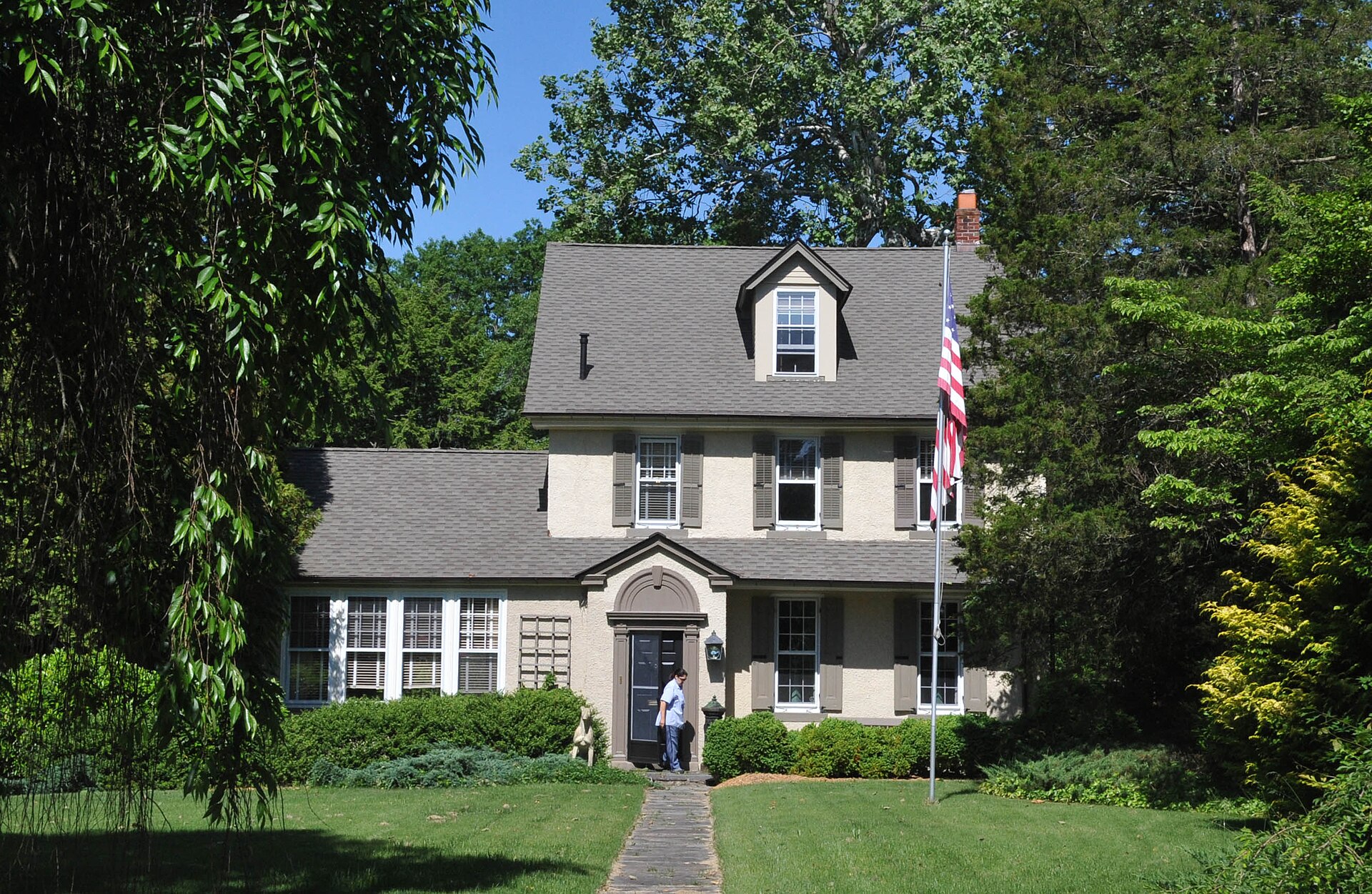
South Jersey’s best-known upper-end addresses sit in Camden and Burlington counties — Haddonfield, Moorestown, Medford. Gloucester County gets less attention, and that is precisely why buyers who look carefully often find more house and more land for their money there. Two boroughs in particular reward a closer look: Wenonah and Pitman. Both are small, both are walkable, and both have housing stock built in an era when homes were made to a standard rather than to a budget.
Wenonah at a glance
Wenonah is a compact borough of roughly one square mile, laid out in the 1870s as a planned community, and it still reads that way. Curving streets, mature trees, deep lots, and a collection of large Victorians, Colonial Revivals, and Arts and Crafts homes give it a character that is difficult to replicate. The borough maintains an extensive network of walking trails through wooded land and along Mantua Creek, which is a significant part of the appeal for buyers coming from denser suburbs.
The scale is intimate. There is a small commercial pocket, a train station building surviving from the borough’s railroad era, and a strong civic culture — the kind of place where the Fourth of July parade is a genuine community event. Inventory is limited by definition. In a borough this small, only a handful of the larger homes trade in a given year, and the best ones often draw competition.
Pitman at a glance
Pitman, immediately adjacent, has a different origin. It grew from Pitman Grove, a Methodist camp meeting founded in the 1870s whose radial street plan still fans out from the historic auditorium. That history left behind an unusual mix: tiny original camp cottages, substantial Victorians on the surrounding streets, and mid-century and later homes filling in the rest.
Pitman also has something Wenonah does not — a real downtown. Broadway carries restaurants, shops, and the restored Broadway Theatre, which draws audiences from across the county. For buyers who want to walk to dinner and a show, that is a meaningful daily-life difference.
The housing stock
In both boroughs, the upper end of the market is generally an older home, often 3,000 square feet or more, on a lot larger than a comparable price buys in Camden County’s better-known towns. Expect to encounter:
- Late-nineteenth and early-twentieth-century Victorians with wraparound porches, high ceilings, and original millwork
- Colonial Revival and Foursquare homes from the 1900s through the 1930s
- A limited number of newer custom homes on infill lots or at the borough edges
What you will not find much of is new construction at scale. If a brand-new home is a requirement, these boroughs will frustrate you, and you should look instead at newer developments in Harrison Township, Mullica Hill, or Washington Township.
Getting around
Both boroughs sit within easy reach of Route 55, which connects north toward Route 42 and the Walt Whitman Bridge and south toward the shore. Center City Philadelphia is a manageable drive outside of peak congestion. Rowan University in nearby Glassboro shapes the area’s economy and cultural offerings, and the long-discussed Glassboro–Camden rail line is a project buyers occasionally ask about. Treat any transit plan as speculative until construction is actually underway, and do not pay a premium for it.
Due diligence for older homes
Buying a hundred-year-old house in excellent condition is a pleasure. Buying one that looks excellent and is not can be expensive. In this part of South Jersey, focus your inspection dollars on the following.
Underground storage tanks
Homes originally heated with oil may have a buried tank, sometimes decommissioned improperly or simply forgotten. A tank sweep is inexpensive relative to the cost of remediation if a tank has leaked, and it is standard practice in South Jersey for good reason. Make it part of your inspection contingency.
Systems and building envelope
Check the age and condition of the roof, heating system, electrical service and panel, and plumbing supply lines. Knob-and-tube wiring and galvanized piping still turn up. Ask about insulation — many of these homes were never meaningfully insulated, and comfort and utility costs follow directly from that.
Water, drainage, and the creek
Properties near Mantua Creek and its tributaries deserve attention to grading, basement moisture history, and current flood mapping. Pull the flood determination for the specific parcel rather than relying on a general impression of the street.
Historic character and alterations
If you plan to add on, replace windows, or change the exterior, confirm which borough approvals apply before you close. Small boroughs can have specific standards, and it is far easier to learn the rules during due diligence than after you have hired an architect.
How they compare to Haddonfield and Moorestown
Haddonfield and Moorestown offer larger high-end markets, more consistent liquidity, and the recognition that comes with decades of being the default answer to “where do people move in South Jersey.” Wenonah and Pitman generally offer more land and more house per dollar, a smaller and quieter scale, and thinner resale liquidity at the very top of the range. Neither is better in the abstract. If you are likely to move again within a few years, weigh liquidity carefully. If you are buying a house you intend to keep, the value proposition here is strong.
Frequently asked questions
Are Wenonah and Pitman good options for luxury buyers?
They suit buyers who define luxury as a distinctive, well-built older home on a generous lot in a walkable small town. They are less suited to buyers who want new construction, a gated community, or a deep pool of comparable properties. The high end here is characterful rather than turnkey.
What are property taxes like compared with Pennsylvania?
New Jersey generally carries higher property tax rates than Pennsylvania, and the tradeoff is often lower purchase prices for comparable homes plus different school funding. Rates and assessments vary by municipality and change over time, so the only useful comparison is a side-by-side on two specific homes you are actually considering. I can put that together for you.
How much inventory should I expect?
Very little, especially in Wenonah. In small boroughs, the right house may not be listed on the day you are ready. That argues for arranging financing early, being clear about your criteria, and having someone watching the market — including quietly marketed properties — on your behalf.
Let’s talk about Gloucester County
If Wenonah, Pitman, or the surrounding Gloucester County towns are on your list, or you are comparing them against Haddonfield, Moorestown, or the Philadelphia suburbs, I would be glad to walk you through the differences and what homes are actually trading for right now. Contact James Kennedy at 215-267-8479 or jameskennedy@unlockedteam.com.
Leave a Reply