
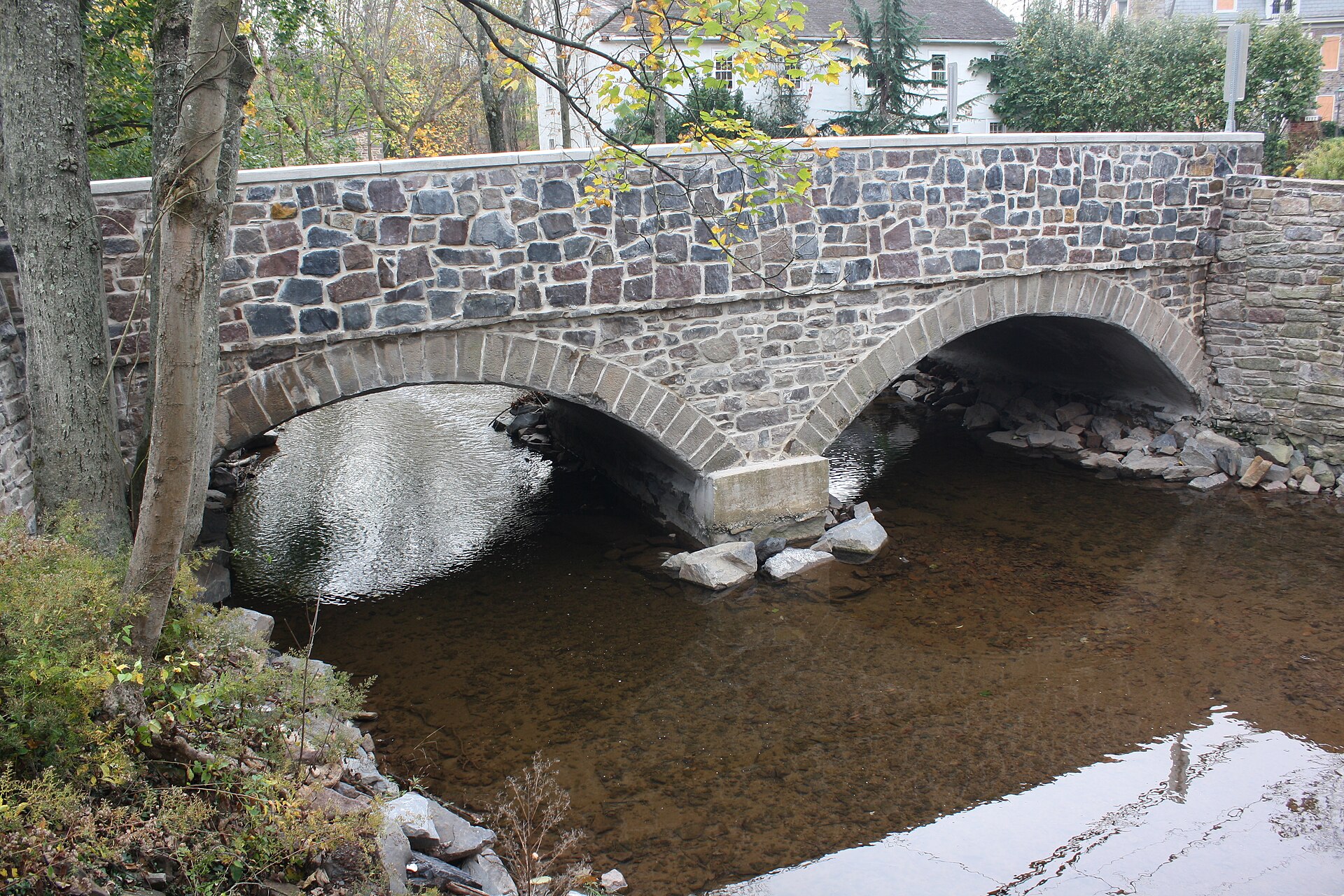
Central Bucks County has a particular kind of appeal for high-end buyers: rolling farmland that has been deliberately kept open, eighteenth-century stone houses that were built to last three centuries, and a village culture that never had to be manufactured. Solebury Township and Buckingham Township sit at the center of that landscape. Together they cover a wide stretch of countryside between Doylestown and the Delaware River, and they hold a meaningful share of the region’s estate-caliber properties.
This guide explains what makes these two townships distinct, what the housing stock actually looks like, and the due diligence that matters when you buy acreage in this part of Pennsylvania.
Where Solebury and Buckingham sit
Solebury Township wraps around the borough of New Hope on the Delaware River and runs west toward Buckingham. It contains the villages of Carversville, Lumberville, Phillips Mill, and Aquetong — small clusters of stone buildings along creeks and old turnpike roads. Buckingham Township lies immediately to the west and south, between Solebury and Doylestown, and includes the villages of Buckingham, Lahaska, Holicong, Pineville, and Wycombe.
Neither township has a conventional downtown. Daily life orbits Doylestown Borough to the west and New Hope to the east, with Lahaska’s shopping village and a scattering of country restaurants and farm markets filling in between. That structure is a feature, not a gap: buyers here are generally choosing land and privacy over walkability, and they accept a short drive as the price of it.
What the housing stock looks like
Historic stone farmhouses
The signature property type is the Bucks County stone farmhouse — typically fieldstone, often built in stages between the mid-1700s and the mid-1800s, with a main block, an older kitchen wing, deep window wells, walk-in fireplaces, and wide-plank floors. Many have been carefully restored over the past several decades, sometimes with a sympathetic addition, a pool, and a converted bank barn or spring house. These are the properties that attract buyers from New York and Philadelphia alike, and the best examples trade well above the county’s general price range.
Estate parcels and land
Both townships still contain sizable parcels — enough acreage for horses, a working orchard, a private drive, or simply a house that no one can see from the road. Some parcels are enrolled in preferential tax programs, some carry conservation easements, and some are ordinary fee-simple land. The differences matter a great deal and are covered below.
Newer custom construction
There is also a steady supply of custom homes built from the 1990s onward, many designed to echo the local vernacular in stone and stucco with modern floor plans, high ceilings, and three-car garages. For buyers who want the setting without the maintenance profile of a 250-year-old house, this is usually where they land. A handful of gated and semi-private enclaves offer larger new homes on two- to five-acre lots.
Land preservation and why it shapes value
Both townships have been unusually active in farmland and open-space preservation, purchasing development rights and accepting conservation easements over many years. The practical effect for a luxury buyer is straightforward: the view across the road from your property is far less likely to become a subdivision than it would be in a township without that history. Preserved land tends to support long-term value on adjoining parcels, and it is one of the reasons the area has held its character while other parts of the region filled in.
The tradeoff is that preservation and zoning also constrain what you can do with your own land. If your plans involve subdividing, building a second dwelling, adding a large accessory structure, or running a business from the property, confirm what the deed and the township ordinance allow before you go under agreement — not after.
Schools and everyday life
Both townships are served by the Central Bucks School District, one of the larger public districts in the region, and the area also sits within reach of several well-regarded independent day schools in Bucks County and nearby Montgomery County. Doylestown provides the everyday infrastructure: hospital, courthouse, library, museums, and a walkable borough with restaurants and shops. New Hope supplies the river-town side of life — galleries, the Bucks County Playhouse, towpath walking along the Delaware Canal, and dining that draws visitors from well outside the county.
Outdoor life is a genuine draw. Peace Valley Park, the Delaware Canal towpath, Bowman’s Hill, and a network of preserved trails and back roads make this one of the better parts of the region for riding, cycling, and running.
Getting around
There is no train station in either township. Most residents drive — to Doylestown for the SEPTA Lansdale/Doylestown Regional Rail line into Center City, or across the river into New Jersey to reach Trenton and connections toward New York. Route 202, Route 413, and Route 32 along the river carry most local traffic. Plan your commute honestly: the drive from a Solebury farmhouse to Center City Philadelphia is a real commitment, and buyers who need to be downtown several days a week often pair a country property with a city pied-à-terre.
What to check before you buy
- Well and septic. Most properties here are not on public water and sewer. Test the well for yield and quality, and have the septic system located, pumped, and inspected. Replacement capacity on a constrained lot can be expensive.
- Conservation easements and deed restrictions. Read the actual recorded instrument. Easements can limit building envelopes, tree removal, impervious coverage, and subdivision permanently.
- Preferential assessment programs. Land enrolled in Pennsylvania’s Clean and Green (Act 319) or in an agricultural security area carries rollback tax exposure if the use changes. Know who pays if that happens.
- Historic designation and township review. Some properties sit in historic districts or carry local review requirements that affect exterior changes, windows, and additions.
- Access and driveways. Shared drives, private lanes, and right-of-way agreements are common. Confirm maintenance obligations in writing.
- Floodplain and creek proximity. Properties near the Delaware, the canal, or the local creeks may sit in or near a mapped flood zone, which affects insurance and lending.
- Old-house systems. Knob-and-tube remnants, undersized electrical service, stone foundation moisture, chimney condition, and buried oil tanks all show up regularly in houses of this age.
Who these townships suit
Solebury and Buckingham reward buyers who want land, privacy, architectural character, and a countryside that is likely to still look like countryside in twenty years. They are a poor fit for someone who wants to walk to dinner, needs a short rail commute, or prefers turnkey new construction in a dense community. Buyers frequently compare this area to Chester County’s horse country and to the Main Line; the honest distinction is that Bucks offers more genuine open space and river-town culture, while the Main Line offers proximity and rail access.
Frequently asked questions
Are Solebury and Buckingham good places to buy an equestrian property?
Yes. Both townships contain acreage suited to horses, with existing barns, run-in sheds, and fenced paddocks on many parcels, plus a network of trails and preserved land nearby. Verify zoning for the number of animals permitted, confirm manure management and setback requirements, and inspect the water supply and barn electrical service before committing.
How do property taxes here compare to the rest of the Philadelphia region?
Bucks County property taxes are generally moderate compared with New Jersey and higher than the City of Philadelphia’s effective rate on many homes, but the number that matters is the one on the specific parcel — assessment practices, land enrollment programs, and improvements all affect it. Ask for the current tax record on any property you are serious about, and factor in rollback exposure on preferentially assessed land.
Is it hard to renovate an eighteenth-century stone farmhouse here?
It is more involved than renovating a newer home, but it is done constantly and there is a deep local bench of masons, carpenters, and architects who specialize in this work. The keys are hiring trades with genuine stone-house experience, budgeting realistically for systems and moisture management, and confirming township and any historic-district review requirements before you design the project.
Talk with James Kennedy
James Kennedy specializes in luxury real estate across Philadelphia and South Jersey and works with buyers and sellers throughout the surrounding Pennsylvania suburbs. If you would like current pricing, recent comparable sales, or a private conversation about your plans, call or text James at 215-267-8479 or email jameskennedy@unlockedteam.com.
Leave a Reply