
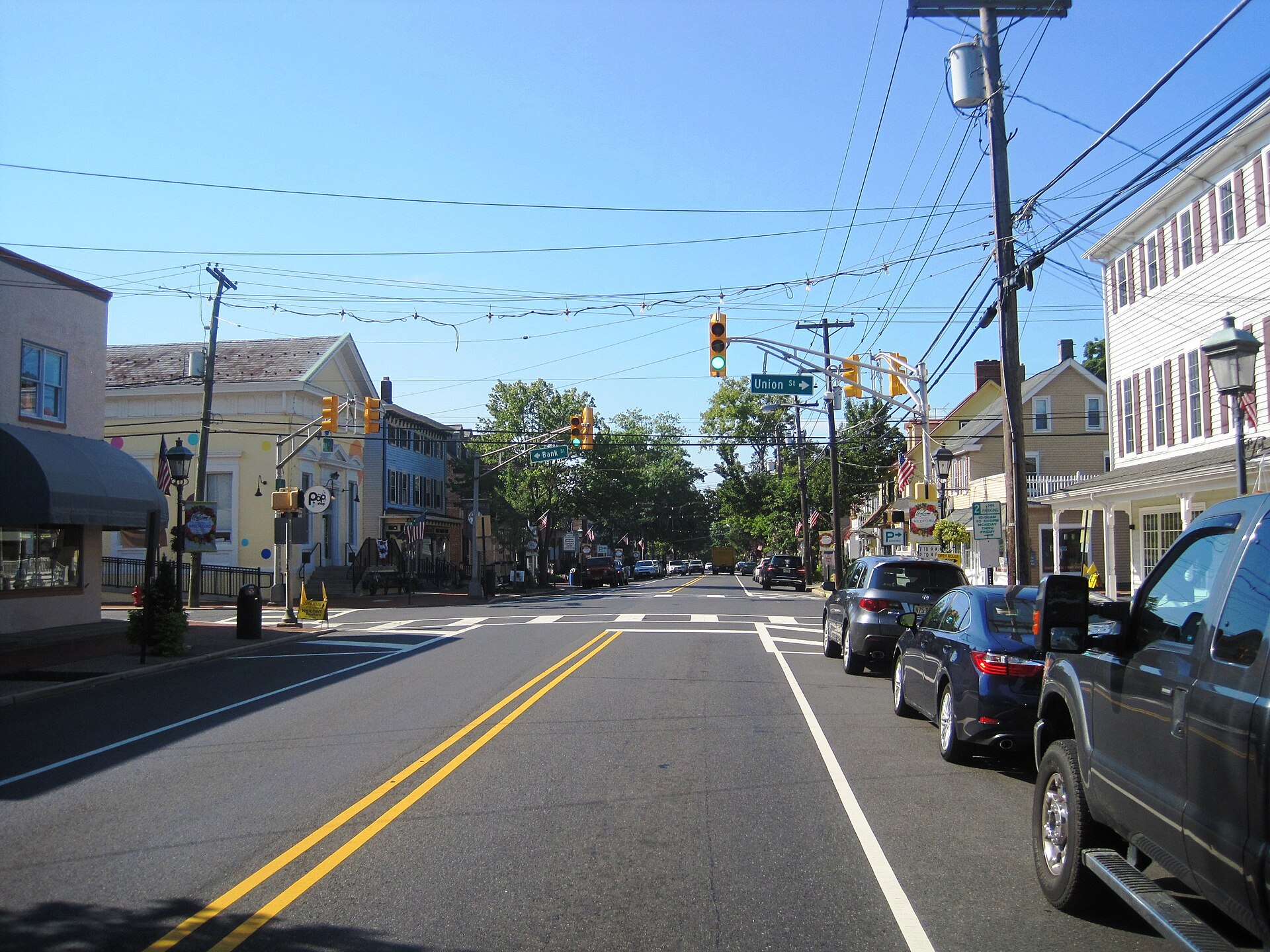
Medford Township sits in Burlington County at the edge of the New Jersey Pine Barrens, roughly a 40-minute drive from Center City Philadelphia. It’s a different kind of South Jersey luxury market than towns like Haddonfield or Moorestown — Medford’s appeal rests less on a dense, walkable downtown and more on space, privacy, and a wooded, semi-rural setting that’s still within reach of the city.
A wooded, low-density luxury market
Medford’s defining physical characteristic is its landscape. Much of the township borders protected Pinelands forest, and residential development here has generally favored larger lots — often an acre or more — with mature tree cover and, in many neighborhoods, private wells and septic systems rather than municipal utilities. For buyers who want a substantial, private homesite without leaving the greater Philadelphia region, that combination is hard to replicate closer to the city or in denser South Jersey suburbs.
The luxury housing stock in Medford includes custom-built homes on wooded acreage, some architect-designed contemporary homes that take advantage of the wooded settings, and a smaller supply of older farmhouses and historic properties near the town’s original village core. Equestrian and hobby-farm properties also show up here more often than in towns closer to Philadelphia, reflecting the more rural character of the area.
Medford Village and downtown character
Unlike the surrounding wooded residential areas, Medford Village itself has a genuine small-town Main Street feel, with independent shops, restaurants, and a historic district that dates back to the town’s early industrial period. It’s smaller in scale than Haddonfield’s or Moorestown’s downtowns, but it gives Medford residents a walkable center for dining and errands even though most of the surrounding housing sits on larger, more spread-out lots.
Schools
Medford is served by its own K-8 school system, with high school students typically attending Shawnee High School as part of the Lenape Regional High School District, which also serves several neighboring Burlington County towns. As with any town, confirming the specific schools and district boundaries tied to an individual address is worth doing early, since boundary lines don’t always track neatly with a town’s overall borders.
Commuting and access
Medford does not have direct passenger rail access, which is an important difference from PATCO-served towns like Haddonfield or Collingswood. Most residents commute by car, typically via Route 70 or Route 541 toward the Ben Franklin Bridge or Tacony-Palmyra Bridge corridors, or toward the PATCO line in Haddonfield or Cherry Hill’s park-and-ride options. For buyers whose work is fully remote or requires only occasional trips into Philadelphia, this trade-off is easy to accept in exchange for the space and privacy Medford offers; for buyers commuting into Center City five days a week by transit, it’s worth test-driving the actual commute before committing.
Lifestyle and setting
Medford’s proximity to the Pine Barrens gives residents easy access to hiking, the Medford Lakes area, and a generally quieter, more nature-oriented lifestyle than towns closer to Philadelphia’s suburbs. Medford Lakes, a distinct community within the township built around a series of small lakes, has its own rustic, cabin-community character that draws buyers looking for something different from typical suburban development. This setting appeals particularly to buyers who value outdoor space, want room for horses or a larger garden, or simply want more separation between themselves and their neighbors.
How Medford compares to other South Jersey towns
- Medford vs. Moorestown: Moorestown offers a denser, more classically manicured suburban feel with a stronger downtown retail core; Medford trades that for larger lots and more wooded privacy.
- Medford vs. Haddonfield: Haddonfield has PATCO rail access and a highly walkable downtown; Medford is a car-dependent town built around space rather than walkability.
- Medford vs. Mullica Hill: Both offer a more rural feel than the inner-ring South Jersey suburbs, though Mullica Hill sits farther south and leans more toward its historic Main Street and antiquing culture.
Frequently asked questions
Does Medford, NJ have train access to Philadelphia?
No, Medford does not have direct passenger rail service. Most residents commute by car, often connecting to PATCO service in a neighboring town or driving directly across one of the Delaware River bridges.
What size lots are typical for luxury homes in Medford?
Many of Medford’s higher-end homes sit on lots of an acre or more, reflecting the township’s wooded, lower-density character relative to inner-ring South Jersey suburbs.
What school district serves Medford?
Medford operates its own K-8 school system, with high school students generally attending Shawnee High School through the Lenape Regional High School District.
If Medford’s blend of space and privacy sounds like the right fit — or if you want to compare it against other South Jersey towns before deciding — James Kennedy can help you evaluate current listings and trade-offs. Reach James at 215-267-8479 or jameskennedy@unlockedteam.com.
What buyers give up, and what they gain
The trade-off in Medford is straightforward: buyers accept a longer or less convenient commute and, in many neighborhoods, private well and septic systems instead of municipal water and sewer, in exchange for larger lots, more tree cover, and a quieter day-to-day setting than they’d find closer to Philadelphia or along the PATCO corridor. For some buyers — particularly those who work from home most of the week, or who want room for a pool, a barn, or simply more distance from neighbors — that trade is an easy one. For buyers who need a five-day-a-week transit commute into Center City, it’s worth weighing carefully before committing to the area.
Private wells and septic systems are common enough in Medford’s more rural sections that they deserve their own line item in due diligence. A well and septic inspection should be a standard part of any offer here, since replacement or remediation costs for either system can run well into five figures and aren’t always obvious from a walkthrough alone.
Leave a Reply