
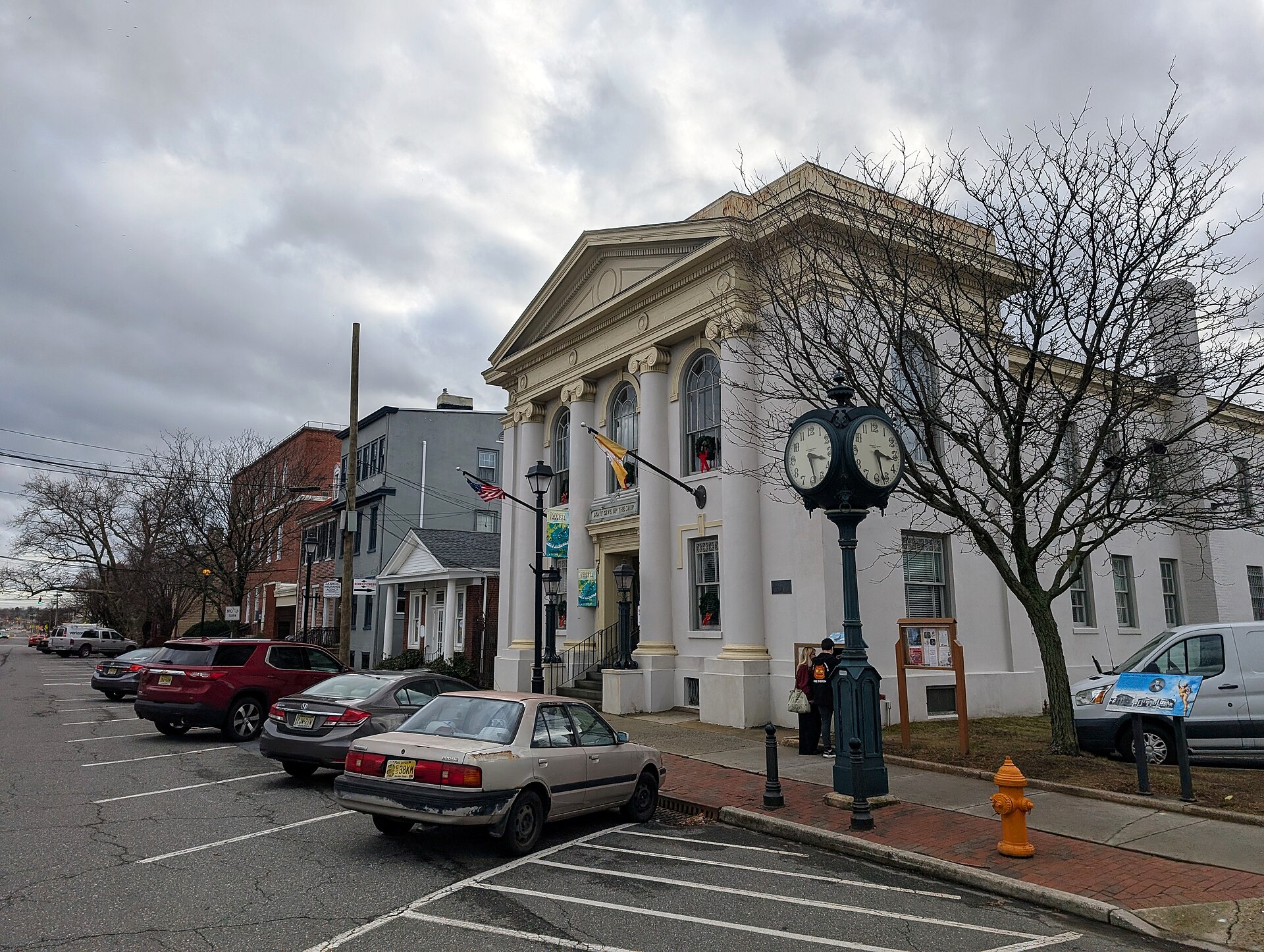
Burlington City is one of the oldest towns in New Jersey, and it wears that history openly. Founded in the 1670s and once the colonial capital of West Jersey, it still has a High Street lined with Georgian, Federal, and Victorian architecture, a riverfront promenade facing the Delaware, and a scale that feels closer to a New England village than to most of suburban South Jersey. Alongside it, Burlington Township offers newer construction and larger lots. For buyers who value architecture, water views, and value relative to comparable historic towns, this corner of Burlington County deserves a serious look.
City and township: two very different markets
The names are similar, and buyers conflate them constantly. They are separate municipalities with separate tax rates, separate governance, and largely separate housing stock.
- Burlington City is compact, walkable, and historic. Its higher-end inventory consists mostly of restored 18th- and 19th-century homes, many of them within or adjacent to the historic district, some with direct Delaware River frontage or views.
- Burlington Township surrounds the city and is far more suburban: subdivisions, larger and more uniform lots, newer construction, and easier access to Route 541, I-295, and the New Jersey Turnpike.
A buyer looking for a restored Federal townhouse and a buyer looking for a four-bedroom colonial on half an acre are shopping in the same zip code and effectively in two different markets.
The architecture is the draw
The upper end of the city market is defined by original architecture. You will find brick Georgian and Federal houses with dentil molding, six-over-six windows, and original stair details; Greek Revival and Italianate homes from the mid-1800s; and later Victorians with wraparound porches. Many face or sit a block from the river, and a subset have the combination that commands the strongest premium: an intact historic exterior, a thoughtfully modernized interior, and a water view.
The riverfront promenade, the Burlington County Lyceum, the historic churches and the surviving colonial-era buildings give the town a texture that is genuinely rare. Buyers who care about that texture tend to know it immediately when they walk High Street. Buyers who want an open-plan new build with a three-car garage will be happier in the township or in nearby Moorestown, Medford, or Mount Laurel.
Location, commuting, and access
Burlington sits directly on the Delaware River across from Bristol, Pennsylvania. Access is unusually good for a town this quiet:
- River LINE light rail runs along the riverfront corridor between Camden and Trenton, with stops in Burlington City, connecting to PATCO and NJ Transit services for onward travel toward Philadelphia and New York.
- Burlington-Bristol Bridge provides a direct crossing into Bucks County, Pennsylvania.
- I-295, Route 130, and the New Jersey Turnpike put Philadelphia, Princeton, and the shore within reasonable reach.
For a household with one person commuting toward Philadelphia and another toward central New Jersey, this location solves a problem that few South Jersey towns solve as neatly.
Due diligence on a historic riverfront home
This is the section to read twice. Older riverfront properties can be exceptional purchases, but they demand a broader inspection scope than a 20-year-old colonial.
Structure, masonry, and moisture
On a brick or stone home built before modern damp-proofing, the details that matter are pointing condition, mortar type used in past repairs, roof and flashing integrity, gutter and downspout discharge, and grading. Improper hard cement pointing on soft historic brick is a common and expensive mistake. Have someone who understands historic masonry look at the envelope, not only a general home inspector.
Systems and capacity
Check electrical service size and panel condition, plumbing material and supply line condition, heating system age and fuel type, and whether the house has been retrofitted for central air in a way that respects the structure. Ask whether knob-and-tube wiring remains anywhere, since some insurers treat it as a condition of coverage.
Historic designation and exterior changes
Properties inside a designated historic district or individually listed can carry review requirements for exterior alterations. That is not a reason to avoid them — it is a reason to know the rules before you plan a rear addition, new windows, or a different roof material. Ask the municipality what applies to the specific address.
Flood zone and insurance
Proximity to the Delaware means some parcels are in or near mapped flood zones. Confirm the flood zone designation, request an elevation certificate if one exists, and obtain a flood and homeowners insurance quote early in your due diligence period. Insurance cost can meaningfully change your carrying cost math on a riverfront property.
Underground storage tanks
South Jersey homes of this era were frequently heated with oil, and abandoned underground tanks are a well-known issue across the region. A tank sweep is inexpensive relative to the remediation exposure and should be standard on any older property here.
New Jersey transaction specifics
New Jersey contracts include an attorney review period, and buyers should also plan for the state’s certificate of occupancy or resale inspection requirements where the municipality imposes them. Your agent and attorney should map the timeline for you at the start, not at the end.
Selling a high-end home in Burlington
The buyer for a restored historic riverfront home is not necessarily local. They may be coming from Philadelphia, from Bucks County, or from out of state, and they are usually buying the story of the house as much as the square footage. That argues for marketing that documents the restoration: what was replaced, what was preserved, when the roof and systems were done, and what makes the property difficult to replicate. Photography needs to capture both the architecture and the river relationship. Pricing requires care, because true comparable sales in this niche can be thin — a good agent will widen the comparison set thoughtfully and explain the adjustments rather than reaching for the nearest sale by address.
Frequently asked questions
Is Burlington City a realistic option for a luxury buyer?
Yes, with a clear-eyed view of what it is. You are buying architecture, history, walkability, and river frontage rather than new-construction amenities. Buyers who want scale and finish level above all else typically end up in Moorestown, Medford, or Mount Laurel; buyers who want a genuinely historic house often find that Burlington offers something those towns cannot.
How does Burlington compare to Bordentown or Riverton?
All three are historic Delaware River towns with strong walkable cores, and buyers frequently look at them together. They differ in scale, in the mix of housing stock, in tax rates, and in the character of their downtowns. The right way to choose is to spend an evening in each, then compare specific properties and their carrying costs side by side.
What should I budget for beyond the purchase price?
On an older home, plan a reserve for envelope and systems work even when the inspection is clean, and get insurance quotes — including flood if applicable — before your contingency periods expire. If you intend to renovate, price the work and confirm what approvals are required before you are contractually committed.
Considering a move to Burlington County or anywhere in South Jersey? James Kennedy helps buyers and sellers of high-end homes across South Jersey and Philadelphia and can give you current pricing, comparable sales, and a candid read on any specific property. Call James at 215-267-8479 or email jameskennedy@unlockedteam.com.
Leave a Reply