
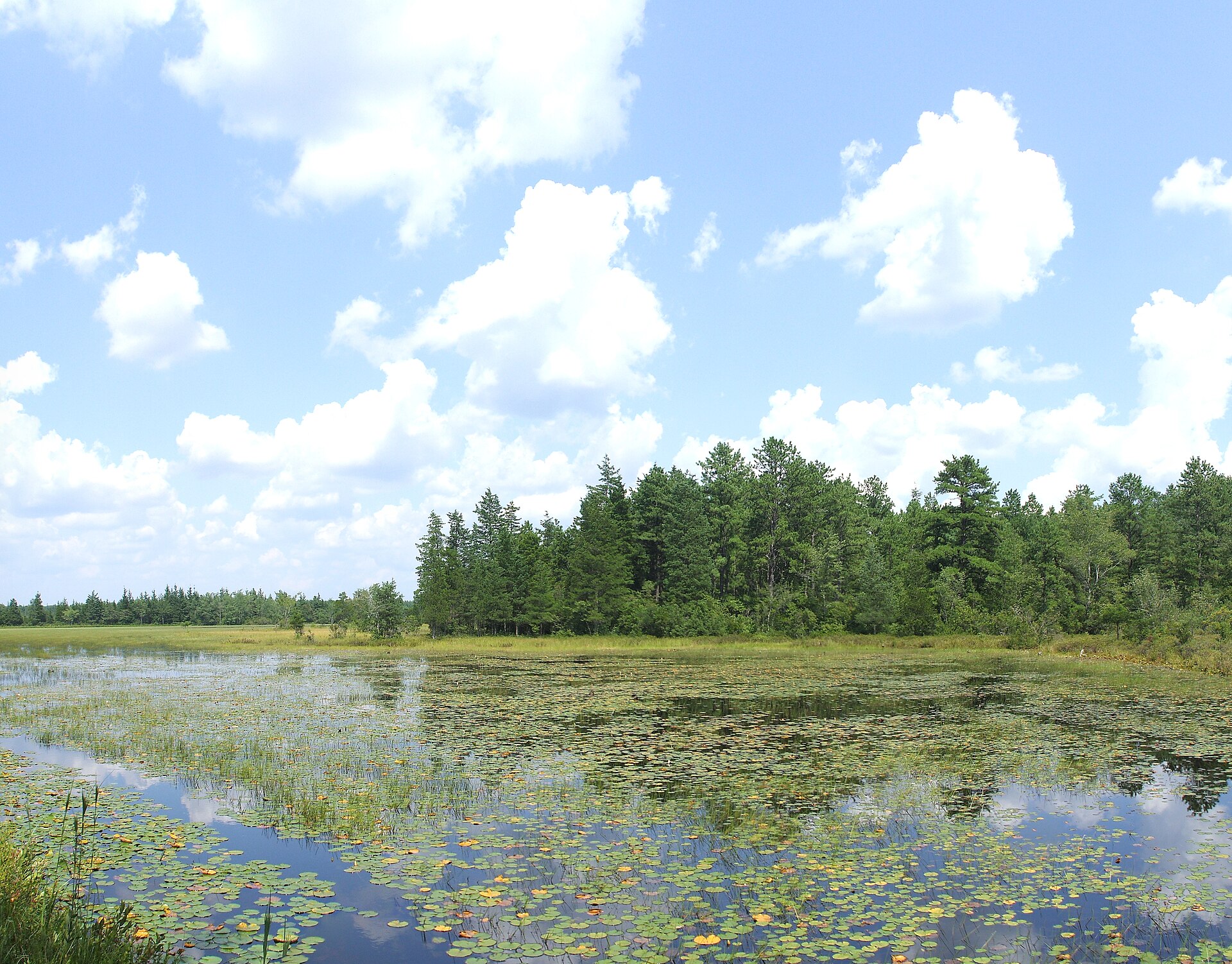
Most South Jersey luxury searches start in Haddonfield, Moorestown, or Medford. Buyers who want more land than those towns can offer often keep driving east, into Tabernacle and Shamong. These two Burlington County townships sit on the western edge of the New Jersey Pinelands, and they trade walkable downtowns for something scarcer: multi-acre parcels, real privacy, and a landscape that state law has permanently protected from dense development. For the right buyer, that combination is worth more than a Main Street.
Where you are, geographically and practically
Tabernacle and Shamong sit roughly southeast of Medford, along the Route 206 and Route 532 corridors. Shamong includes the village of Indian Mills; Tabernacle includes the crossroads of the same name and stretches deep into the Wharton State Forest region. Both townships are large in land area and small in population, which is the entire point.
Practically, this is a car-dependent area. Expect to drive to a grocery store, and expect a real commute to Center City Philadelphia. What you get in return is quiet, dark skies, and the ability to own five, ten, or more acres without leaving the Philadelphia metropolitan area entirely.
What the high-end housing stock looks like
There is no luxury condo tier here. The upper end of these markets is defined by land and by custom construction. Common high-end property types include:
- Custom-built homes on wooded acreage, often set well back from the road with long private drives.
- Equestrian properties, with barns, paddocks, run-in sheds, and riding rings. This corner of Burlington County has a genuine horse culture, and trail access is a real draw.
- Farmhouses and converted agricultural properties, some with outbuildings, cranberry or blueberry heritage, and preserved farmland adjacency.
- Newer estate homes built in the last few decades on subdivided parcels, typically with modern systems and generous square footage.
Because so many of these homes are one-off custom builds rather than production housing, comparable sales are less uniform than in a suburban development. Valuation here depends heavily on land, outbuildings, and finish quality, which makes an experienced local read on the market important.
The Pinelands: what protection actually means for you
The New Jersey Pinelands National Reserve covers a large share of southern New Jersey and is administered under a comprehensive management plan. Different areas within it carry different designations, and those designations govern what can be built, how land can be subdivided, and what environmental review applies.
For a buyer, three consequences matter:
- Your surroundings are unusually stable. Large-scale subdivision near you is far less likely than in an unprotected township. The woods across the road will probably stay woods.
- Your own plans face review. Adding a barn, a pool, an accessory dwelling, or a significant addition may involve township approval and, depending on location and scope, Pinelands Commission review. Timelines can be longer than buyers expect.
- Buildability is not automatic. If you are purchasing vacant land intending to build, confirm in writing what is permitted before you close. Acreage alone does not guarantee a building envelope.
None of this should scare off a serious buyer. It simply means the due diligence period needs to include the regulatory question, not just the home inspection.
Wells, septic, and rural systems
Public water and sewer are limited in these townships. Most estate properties rely on a private well and an on-site septic system, and both deserve dedicated attention.
Water
Have the well tested for yield and for water quality. In sandy Pinelands soils, naturally acidic and iron-rich water is common, and treatment systems are frequently part of the picture. Ask what equipment is installed, how old it is, and what maintenance it requires.
Septic
Ask for the system’s age, design capacity, permit records, and last service date, and have it inspected and pumped as part of due diligence. Capacity matters if you intend to add bedrooms; a system sized for a four-bedroom house constrains a future addition.
Other rural realities
Propane rather than natural gas, generator backup, longer utility restoration times after storms, private road maintenance agreements, and the cost of plowing a long driveway are all normal here. They are manageable, but they belong in your budget from the start.
Getting to Philadelphia and the shore
Route 206 and Route 70 are the main arteries west toward Medford, Marlton, and the Route 295 and New Jersey Turnpike corridors, and on to the bridges into Philadelphia. Expect a longer drive than from Cherry Hill or Haddonfield. In the other direction, the Atlantic City Expressway and Route 72 put the shore within an easy weekend trip, which is one reason these townships appeal to buyers who also spend time on Long Beach Island or in the Cape May County towns.
PATCO and regional rail are not local options in the way they are in inner South Jersey. Buyers who need a rail commute typically drive to a park-and-ride, or they accept the drive.
Lifestyle and land use
Life here is oriented outdoors. Wharton State Forest, Batsto Village, the Mullica and Batona river systems, and the Batona Trail are all close at hand for hiking, paddling, and riding. Farm stands, blueberry and cranberry operations, and preserved farmland shape the local character. Medford’s village center and the shopping in Marlton cover most retail and dining needs within a reasonable drive.
Buyers with school-age children should evaluate the local district structure and the regional high school arrangement directly, along with the independent school options in Burlington and Camden counties. As with any move, verify current details rather than relying on general reputation.
Frequently asked questions
Can I build a barn, pool, or addition on a Pinelands property?
Often yes, but the answer depends on the property’s Pinelands management area designation, the township’s zoning, wetlands and buffer conditions, and your septic capacity. Confirm the specific approvals required before you close rather than assuming, and build the review timeline into your plans.
How does buying an acreage property differ from buying in Haddonfield or Moorestown?
The house is only part of the transaction. You are also buying land, well and septic infrastructure, outbuildings, and a regulatory context. Due diligence should include a survey, well yield and water quality testing, a septic inspection, a wetlands and buffer review, and confirmation of any farmland assessment or preservation easements attached to the parcel.
Do these properties hold their value?
Value in this market is driven primarily by land, privacy, and the quality and condition of custom improvements, and the permanent development constraints in the Pinelands support the scarcity of large private parcels. Because each property is unique, pricing requires a careful, property-specific analysis rather than a simple price-per-square-foot comparison.
If you are considering an acreage or equestrian property in Tabernacle, Shamong, or anywhere in Burlington County, James Kennedy can help you evaluate the land, the systems, and the regulatory picture before you commit. Call James at 215-267-8479 or email jameskennedy@unlockedteam.com.
Leave a Reply