
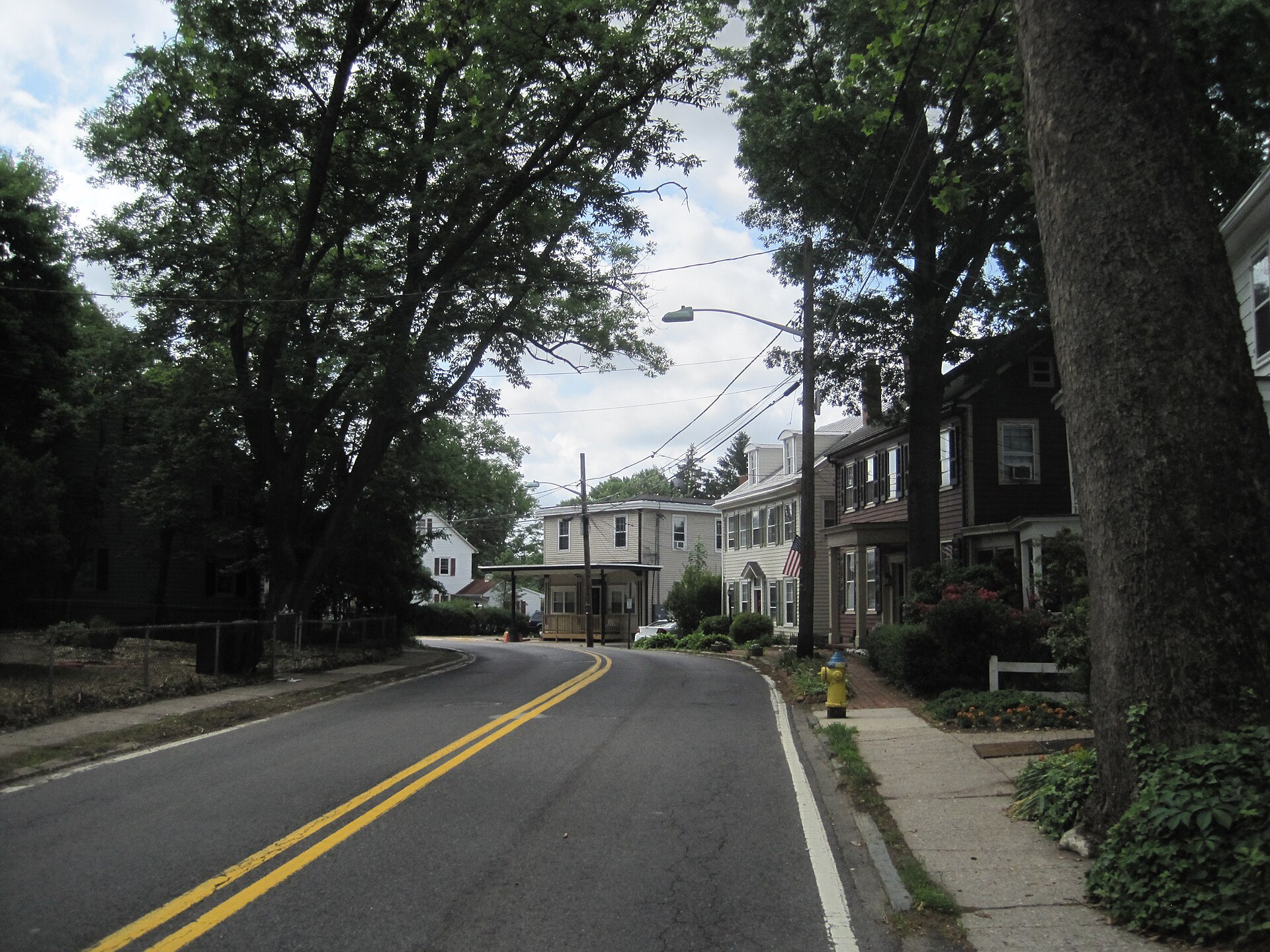
Buyers who want acreage, quiet, and a genuine sense of place often overlook the northern edge of Burlington County. Chesterfield Township and its historic village of Crosswicks sit in a farm belt that has been deliberately protected from sprawl, which is exactly why the housing here feels different from the subdivision-heavy corridors farther south. If your search includes words like land, privacy, custom build, or barn, this is a corner of South Jersey worth understanding.
Where Chesterfield and Crosswicks actually are
Chesterfield Township occupies the rolling farmland between Bordentown, Allentown, and the Hamilton–Robbinsville edge of Mercer County. Crosswicks is the small colonial village inside it, built around a Quaker meeting house and a creek of the same name. The township is bordered by preserved agricultural land on most sides, and the drive in from any direction is fields rather than strip retail.
Practically speaking, this places a buyer roughly between two job markets. Princeton, Trenton, and the Route 1 corridor are a short drive north. Philadelphia is reachable south via I-295 or the New Jersey Turnpike, and the Hamilton NJ Transit station puts New York within a single-seat train ride. That dual-direction access is a large part of why buyers with high-end budgets end up here rather than in a more predictable suburb.
What the housing stock looks like
There is no single Chesterfield house. Instead there are three broad categories, and they behave very differently in a transaction.
Historic village and farmhouse properties
Crosswicks and the surrounding roads hold eighteenth- and nineteenth-century farmhouses, some restored to a very high level and some still waiting for a serious renovation. These are character purchases: wide-plank floors, deep sills, outbuildings, and mature trees. They also carry the usual older-home considerations — heating systems, knob-and-tube remnants, foundation moisture, and roofing that may be slate or standing-seam metal rather than architectural shingle.
Old York Village and planned neighborhoods
Chesterfield took an unusual approach to growth by concentrating new residential development into a designed village rather than scattering it across farmland. The result is newer construction with traditional detailing, sidewalks, and shared open space, while the surrounding acreage stayed in agriculture. For buyers who want a newer home with modern systems but not a cul-de-sac aesthetic, this is often the fit.
Custom estates on acreage
The top of the market here is typically a custom-built home on several acres, sometimes with a barn, riding ring, pool house, or accessory structure. These properties are where the real luxury inventory sits, and they trade thinly — often only a handful in a given year — which makes timing and agent relationships matter more than in a high-turnover market.
Land, preservation, and the questions to ask early
Because so much of the township is farmland, several land issues come up here that rarely appear in a suburban purchase. Ask about them at the showing stage, not at inspection.
- Farmland assessment. Some parcels carry a preferential agricultural tax assessment. If the qualifying use stops after you buy, rollback taxes can be triggered. Confirm in writing what the current assessment status is and what maintaining it requires.
- Deed restrictions and easements. Preserved parcels may carry permanent restrictions on subdivision or on building envelopes. These are recorded and enforceable, and they can quietly rule out the pool, guest house, or addition you were picturing.
- Well and septic. Most estate properties here are not on public water and sewer. Budget for water quality testing, flow testing, and a septic inspection, and understand where the leach field sits relative to any structure you might add.
- Right-to-farm realities. Working agriculture nearby means equipment noise, spray schedules, and seasonal odor. Most buyers who choose this area consider that a feature, but it should be a conscious choice.
- Flood and wetlands. Crosswicks Creek and its tributaries create wetlands and floodplain in places. Check mapping before you fall in love with a low-lying meadow.
Daily life and what buyers say they value
The appeal is not amenities in the shopping-center sense. It is space, dark skies, and a village center that still functions as one. Chesterfield’s school setup is small and locally focused, with older students continuing to a regional high school — a structure many families here specifically want. Bordentown’s restaurant-lined Farnsworth Avenue is a few minutes away for dinner. Princeton supplies the higher-end retail, cultural calendar, and dining that acreage buyers tend to want within reach but not next door.
Recreation is outdoor and low-key: trail riding, cycling on farm roads, kayaking Crosswicks Creek, and a short drive to the Delaware River towns. Buyers who want a country club and a walkable Main Line-style downtown are usually happier elsewhere; buyers who want twenty minutes of hedgerow between them and traffic tend to stay for decades.
How to approach the search
Estate inventory in this market is thin and irregular. Three habits help.
- Be defined about land. Decide early whether you need five acres or twenty, whether outbuildings are essential, and whether you would build. That focus is what allows an agent to surface properties before they are widely marketed.
- Get financing sorted for the property type. Acreage, outbuildings, and unusual improvements can complicate appraisals and lending. Talk to a lender who has actually closed rural high-end deals in New Jersey.
- Expect a longer diligence period. Between well, septic, oil tank sweeps, survey, and easement review, a Chesterfield purchase carries more homework than a comparable suburban one. Build the calendar for it in the contract.
Frequently asked questions
Is Chesterfield Township a good option if I commute to Philadelphia?
It can be, particularly for a hybrid schedule. Access to I-295 and the New Jersey Turnpike is straightforward, though you are farther out than Moorestown or Cherry Hill. Buyers who commute daily into Center City usually weigh the extra drive against the acreage they could not get closer in.
What should I budget beyond the purchase price on an estate property here?
Plan for ongoing costs that suburban buyers rarely see: well and septic maintenance, generator service, longer driveways to plow and seal, field and fence upkeep, and outbuilding roofs. None of these are alarming, but together they change the annual carrying cost of a property meaningfully.
How competitive is the market for the best properties?
Because so few true estate homes come available, the strongest listings can move quickly even when the broader market is calm, while unusual or dated properties can sit for a long time. Pricing here is property-specific rather than neighborhood-specific, so a current comparable analysis matters more than any general market statistic.
Talk it through with James Kennedy
James Kennedy specializes in luxury real estate across Philadelphia and South Jersey, and he can give you current, address-specific guidance rather than generalities. Call or text 215-267-8479 or email jameskennedy@unlockedteam.com to start the conversation.
Leave a Reply