
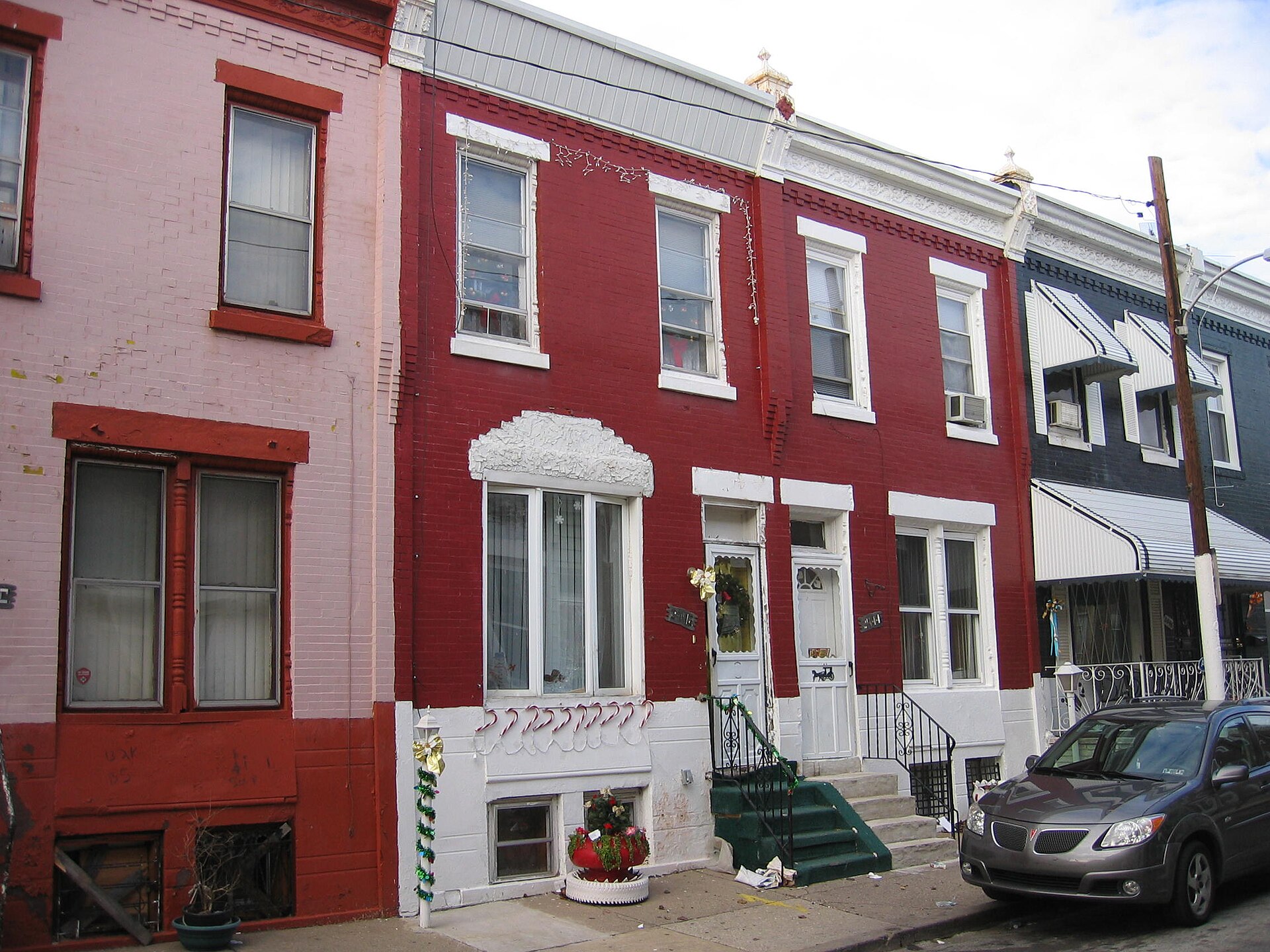
Philadelphia’s luxury market includes plenty of detached homes in Chestnut Hill or on the Main Line, but a significant share of the city’s highest-value real estate — in Rittenhouse Square, Society Hill, Fitler Square, Queen Village, and dozens of other neighborhoods — sits in rowhomes and twins that share at least one structural wall with the house next door. That shared wall, known legally as a party wall, comes with its own set of rights, obligations, and potential friction points that buyers moving from detached homes elsewhere often haven’t had to think about.
What a Party Wall Actually Is
A party wall is a wall that sits on or along the boundary line between two properties and is shared by both. In a Philadelphia rowhome block, the walls separating each house from its neighbors are typically party walls, often original brick or masonry construction dating back a century or more. In a twin, it’s usually the single wall dividing the two halves of the building. Because the wall serves both structures — supporting the roof line, carrying some of the load, and separating the two homes for fire and sound — neither owner can treat it as entirely their own property to modify, remove, or damage without regard for the other side.
In many older Philadelphia neighborhoods, party wall rights and responsibilities are governed by a combination of common law, city building code, and sometimes a formal recorded party wall agreement between the two properties. Not every rowhome has a written agreement on file, which is part of what makes this worth investigating rather than assuming.
Why It Matters More at the Luxury End
In a modest rowhome, party wall issues might come up only occasionally — a leak, a shared roofline repair. At the luxury end, where owners are more likely to be doing significant renovations, adding structural elements, extending upward, or finishing basements, party wall questions come up constantly. Excavating a basement for a wine cellar or home theater, adding a rooftop deck, or extending a rear addition can all affect the shared wall or the neighboring foundation, and construction that goes wrong can create real liability, not just an awkward conversation with the neighbor.
Buyers evaluating a high-end rowhome renovation, whether newly completed or planned, should understand that the presence of a party wall changes what’s possible and what permitting and neighbor notification requirements apply, compared with a similar project on a detached home.
Common Issues Buyers and Sellers Encounter
A few situations come up repeatedly in Philadelphia rowhome and twin transactions. One is discovering, often only at the point of a renovation or an addition, that there’s no formal party wall agreement on record, leaving both sides to rely on informal understanding or city code defaults. Another is a prior owner’s renovation that altered or penetrated the party wall — running plumbing, electrical, or HVAC through or along it — without clear documentation of what was done or whether the neighbor consented. A third is settlement or movement in an old masonry party wall that shows up as cracking, which can be a purely cosmetic issue or a sign of a more significant structural concern depending on the building’s history.
None of these issues are necessarily deal-breakers, but they’re the kind of thing that benefits from being surfaced and understood before closing rather than after, especially on a high-value purchase where a buyer may be planning renovations of their own.
What to Check Before You Buy or List
For buyers, it’s worth asking directly whether a recorded party wall agreement exists for the property, and if so, reviewing what it says about maintenance responsibility, cost-sharing, and any restrictions on alterations. A qualified home inspector experienced with older Philadelphia construction can flag visible signs of party wall movement or prior unpermitted work, though a structural engineer may be warranted for a property where significant work is planned or where cracking or settlement is visible.
For sellers, gathering any documentation related to the party wall — permits for past work that touched it, any correspondence or agreements with the neighboring owner — ahead of listing can prevent last-minute questions from slowing down a deal. If a renovation is planned or already underway at the time of sale, having clear records of what was approved and by whom protects both the seller and the eventual buyer.
Renovating Without Creating a Dispute
Philadelphia’s building code has specific requirements around work that affects a party wall, including notification to the adjoining property owner in many cases and, depending on the scope, formal party wall agreements executed as part of the permitting process. Owners planning a significant renovation — a rear addition, a roof deck, a basement excavation — should loop in a contractor and, where the project is substantial, an attorney experienced in party wall matters early in the planning process rather than after work has started. Getting this right protects the project timeline as much as it protects the relationship with the neighbor.
Frequently asked questions
Do all Philadelphia rowhomes have a written party wall agreement?
No. Many older rowhomes were built without a formal recorded agreement, and rights and responsibilities default to common law and city code in that case. It’s worth checking the property’s title history and prior permits to see what, if anything, is on record before assuming one exists.
Can I be held responsible for damage caused by my neighbor’s renovation to a shared wall?
Generally a party wall owner is responsible for damage they or their contractor cause, not damage caused by the neighbor’s work, but the details depend on the specific facts, any recorded agreement, and applicable law. This is a good question to raise with a real estate attorney if a dispute or damage actually occurs.
Does having a party wall affect what renovations I can do?
It doesn’t prevent renovation, but it does mean certain types of work — anything that touches, penetrates, or could affect the structural integrity of the shared wall — typically requires additional notice, documentation, or agreement with the neighboring owner as part of the permitting process, which can add time to a project’s planning phase.
If you’re buying or selling a rowhome or twin in Philadelphia and want a clear-eyed read on what a shared wall means for your plans, James Kennedy can help. Reach James at 215-267-8479 or jameskennedy@unlockedteam.com.
Leave a Reply