
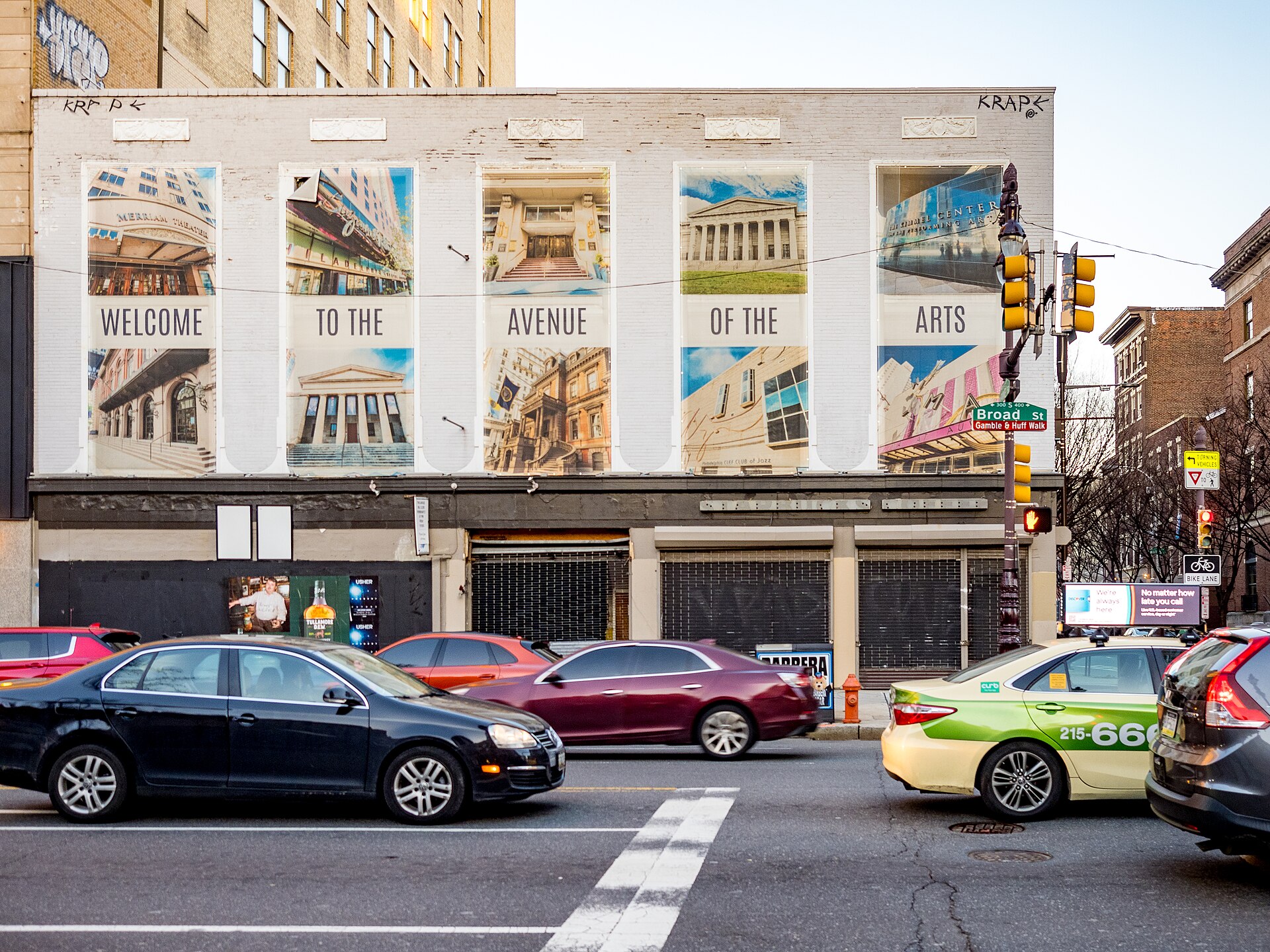
South Broad Street between City Hall and Washington Avenue carries a formal name — the Avenue of the Arts — and it is one of the few places in Philadelphia where a luxury buyer can walk out a lobby door and be inside a concert hall in four minutes. For buyers who want a full-service building, a doorman, an elevator, and a cultural calendar within a few blocks, the Avenue of the Arts corridor is a distinct alternative to the low-rise charm of Rittenhouse Square or the historic blocks of Society Hill. This guide covers what living on South Broad actually involves, what to look for in the buildings, and who tends to be happiest here.
What the Avenue of the Arts corridor is
The corridor runs south from City Hall past the Kimmel Center, the Academy of Music, the Merriam Theater, and a cluster of smaller performance venues and arts schools. North Broad, above City Hall, has its own converted-industrial character and is worth a separate look. The stretch most buyers mean when they say “Avenue of the Arts” is the roughly ten blocks below City Hall, where a handful of high-rise residential buildings sit alongside hotels, theaters, and restaurants.
The practical appeal is density of amenity. Within a short walk you have the orchestra, touring Broadway productions, several of the city’s better restaurants, the Rittenhouse retail spine one block west, and the Broad Street Line for a direct ride to the stadiums or the airport connection. City Hall Station puts you on every subway and trolley line in the system.
The housing stock: what you are actually buying
Homes on and immediately around South Broad fall into three broad categories:
- Full-service high-rise condominiums. Doorman or concierge staff, on-site management, fitness facilities, sometimes a pool, and often valet or deeded garage parking. These buildings are where most of the high-end inventory sits.
- Condo-hotel and branded residences. A few buildings pair residences with hotel operations, which can mean housekeeping and room service available to owners — and also more restrictive rules and a different fee structure.
- Converted historic buildings. Former office and institutional buildings east and west of Broad have been converted to residential use, often with unusually generous ceiling heights and window proportions that new construction rarely matches.
At the upper end, expect large single-floor layouts, private elevator vestibules in some buildings, and floor-to-ceiling glass with skyline or river views. The premium in these buildings is driven far more by floor, exposure, and view corridor than by square footage alone. Two identical stacks can differ meaningfully in value because one looks down an open street grid and the other faces a wall.
Fees, reserves, and the questions that matter
The monthly carrying cost in a full-service building is the single most common surprise for buyers moving in from a house. A staffed lobby, engineers, elevators, common-area utilities, and amenity spaces all cost money, and they are funded by the condominium fee. That is not a red flag by itself — it is what you are buying — but you should understand exactly what it covers and whether it is being collected at a realistic level.
Documents to request and read
- The last two to three years of budgets and the current reserve study, if one exists. A building with a thin reserve is a building that will pass special assessments to owners.
- Minutes from recent board meetings. Minutes tell you about facade work, elevator modernization, roof replacement, and litigation long before those items reach a disclosure form.
- The declaration and bylaws, with attention to leasing rules, pet limits, renovation approval processes, guest and short-term-stay policies, and whether the association or a sponsor controls the board.
- The insurance certificate and the master policy deductible, which determines how much of a loss falls on the unit owner.
Ask specifically about the age and condition of major building systems: the curtain wall and window seals, the elevators, the HVAC plant, and the roof. In glass towers, window and facade work is expensive and difficult to phase.
Parking, deliveries, and everyday logistics
Parking is a real asset on South Broad, and how a building handles it varies. Deeded garage spaces convey with the unit and add value. Valet arrangements are convenient but sometimes licensed rather than owned, and they can change. If you keep more than one car, confirm availability of a second space before you write an offer, because second spaces are often scarce and separately priced.
Also ask about the loading dock and freight elevator policy. Buildings with tight move-in windows, limited freight hours, or a single service elevator make renovations and large deliveries meaningfully harder. If you plan to combine units or do a gut renovation, the building’s construction rules will shape your timeline more than your contractor will.
Noise, event traffic, and the trade-off of a busy street
Broad Street is a wide, active arterial. On performance nights and during parades or race events, the sidewalks and curb lanes are busy. Higher floors and modern glazing handle it well; lower floors on the street side do not always. Visit a prospective unit at night and on a weekend, not just on a quiet weekday morning. Buyers who love the energy find the location unbeatable; buyers who want silence usually end up a block or two off Broad, where the same walkability comes with a calmer front door.
Who the corridor suits
The Avenue of the Arts works especially well for three groups: empty nesters trading a suburban house for a lock-and-leave residence, second-home buyers who want a city base for a few nights a month, and professionals who value walking to work and to dinner more than they value a yard. It suits people who want building staff to sign for packages, accept deliveries, and handle the maintenance that a single-family home would put on their own calendar.
It is a weaker fit for buyers who want private outdoor space at scale. Terraces exist and command a premium, but they are the exception. Buyers who want a garden usually do better in Society Hill, Fitler Square, or the near suburbs.
Frequently asked questions
Is a condo on the Avenue of the Arts a good long-term hold?
Value in city condominiums tends to track the quality of the building’s management and the durability of its location more than the finishes in any one unit. Buildings with healthy reserves, competent boards, deeded parking, and a walkable location have historically held their appeal better than buildings that deferred maintenance. Ask for current comparable sales in the specific building rather than relying on citywide averages.
How does a full-service tower compare with a Rittenhouse Square townhouse?
A tower gives you staff, security, elevator access, and no exterior maintenance, in exchange for monthly fees and shared decision-making. A townhouse gives you autonomy, private outdoor space, and full control of your renovation, in exchange for handling everything yourself. Neither is better; they suit different stages of life.
Can I rent the unit out when I am not using it?
That depends entirely on the building. Some associations permit long-term leases with a minimum term, some cap the percentage of leased units, and most prohibit short-term rentals outright. Confirm the current rule in writing before you buy if rental flexibility matters to you.
If you are considering a residence on or near the Avenue of the Arts — or comparing it against Rittenhouse Square, Society Hill, or a suburban alternative — I am glad to walk you through the specific buildings, their fee structures, and what is quietly available. Reach James Kennedy at 215-267-8479 or jameskennedy@unlockedteam.com for a confidential conversation about your search.
Leave a Reply