
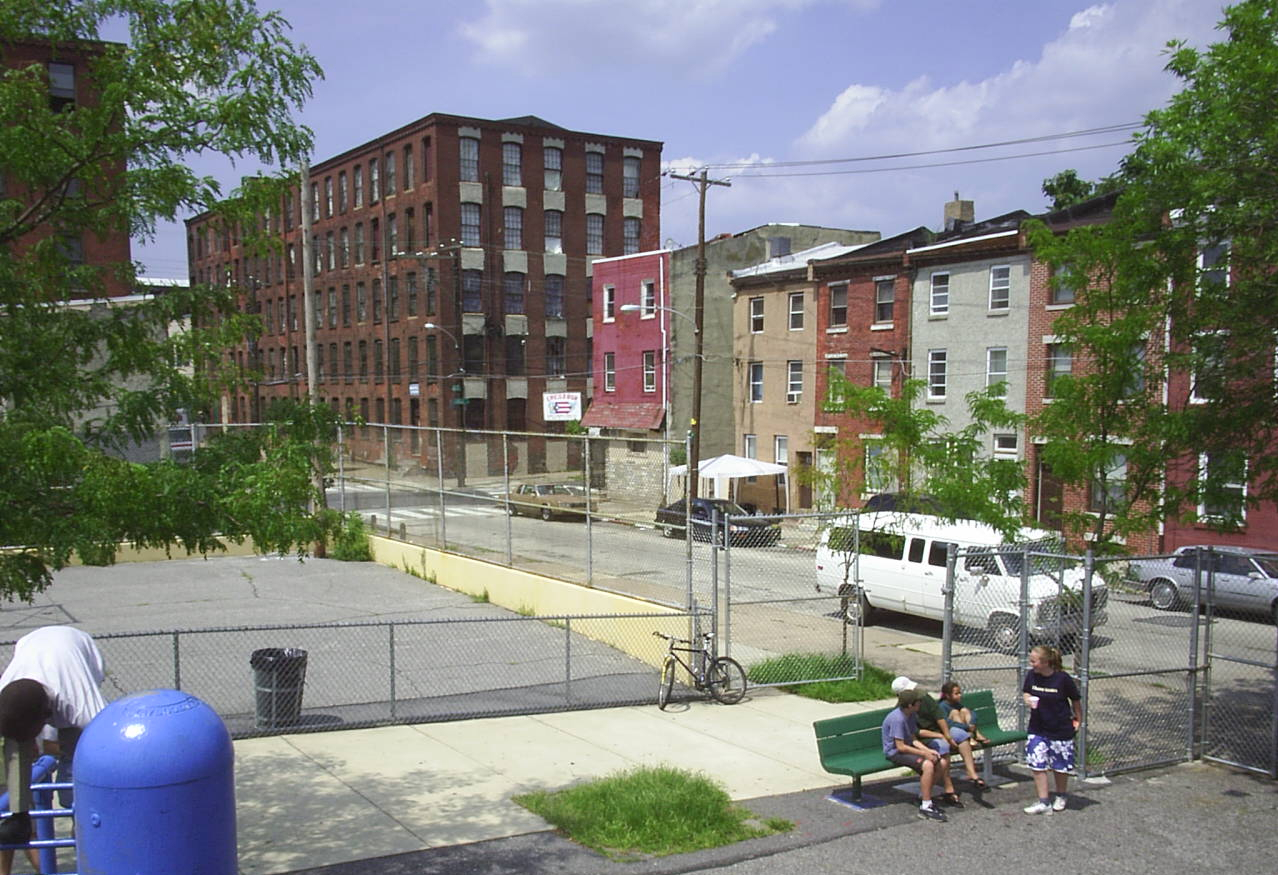
Philadelphia’s Kensington name covers a lot of ground, and the southern edge of it — the blocks generally known as Old Kensington and South Kensington, roughly between Girard Avenue and Berks Street, east of Front Street toward the Fishtown line — has quietly become one of the city’s most active corridors for new, high-specification homes. Buyers who first shopped Fishtown or Northern Liberties often end up here, because this is where the newest construction and the largest floor plans are being built inside the same walkable radius.
Where Old Kensington and South Kensington sit
These blocks form a wedge between Northern Liberties to the south, Fishtown to the east, and Norris Square to the north. American Street, Front Street, and Girard Avenue are the main spines. The Market-Frankford Line stops at Girard and at Berks, which puts Center City within a short ride, and the Girard Avenue trolley connects west toward Fairmount and the Art Museum.
The area’s industrial past is the reason it looks the way it does today. Former textile mills, machine shops, and warehouses left behind unusually large parcels in a city otherwise built on narrow rowhome lots. Those parcels are what allow the wider, deeper homes and the courtyard developments you see going up now.
What the housing stock actually looks like
New-construction townhomes
The dominant product at the upper end is the three- to four-story new townhome, frequently with a finished lower level, a roof deck, and an integrated garage. Widths of twenty feet or more are common here in a way they are not in older, denser neighborhoods, and that extra width changes the interior layout completely — real hallways, side-by-side rooms, and staircases that do not eat the floor plan.
Converted industrial buildings
A handful of mill and warehouse conversions offer loft-style condominiums with timber posts, exposed brick, and window openings no new building would replicate. These trade on character rather than efficiency, and they appeal to buyers who want scale and light more than a turnkey mechanical system.
Rehabbed and expanded rowhomes
Between the new construction sit original two- and three-story rowhomes, many gut-renovated with rear additions and roof decks. Quality varies enormously from block to block and builder to builder, which is exactly why an independent inspection matters more here than in a neighborhood of uniform housing stock.
What draws high-end buyers to these blocks
- Square footage per dollar. Compared with Rittenhouse, Society Hill, or even core Fishtown, buyers here tend to get more finished space, more outdoor space, and more often a garage.
- Parking. Integrated garages are far more common in newly built homes here than in the historic districts, which is a genuine lifestyle difference in Philadelphia.
- Walkability without saturation. Frankford Avenue’s restaurant corridor, Girard Avenue, and Northern Liberties are all within a walk, but the residential blocks themselves stay quiet.
- Outdoor space. Roof decks with skyline views, rear patios, and the occasional side yard are standard rather than exceptional.
- Newer systems. Buyers who do not want to manage a century-old house get modern HVAC, plumbing, electrical, and insulation with warranty coverage still in place.
What to check carefully before you buy
This is a neighborhood in transition, and that cuts both ways. A few things deserve real attention:
- Block-by-block variation. One block can be almost entirely rebuilt while the next still has vacant lots and older housing. Walk the block at different times of day before committing.
- Tax abatement status. Many new homes carry a residential tax abatement, and the terms have changed over the years. Confirm exactly what remains, when it expires, and what the tax bill will look like afterward.
- Construction quality. Builders here range from meticulous to indifferent. Look at stucco and siding details, flashing, window installation, roof deck waterproofing, and the depth of the framing. Hire your own inspector regardless of how new the home is.
- Warranty and builder track record. Ask who built it, what else they have built nearby, and what warranty transfers to you.
- Nearby development. An empty lot next door will eventually be built on. Check zoning and any active permits before assuming a view or a light exposure is permanent.
- Resale depth. The most expensive home on a block that has not yet turned over will take longer to resell. Pricing discipline matters here more than in an established luxury district.
Who these blocks suit
Buyers who want new construction, want to be in the city, want to park a car, and are comfortable in a neighborhood that is still visibly changing tend to do very well here. Buyers who want a settled, uniform streetscape and immediate long-term certainty about their block are usually better matched to Society Hill, Fitler Square, or Chestnut Hill. Neither preference is wrong — they are simply different bets on the same city.
How to approach a purchase here
Because the housing stock is so uneven, comparable sales require judgment rather than arithmetic. Two homes a hundred feet apart can justify meaningfully different values based on width, garage, finish level, abatement status, and the condition of the surrounding block. Work from a comparable set your agent can defend line by line, and be prepared to move quickly on the best-built homes — those are the ones that draw multiple offers even when the broader market is quiet.
Frequently asked questions
Is Old Kensington the same as Fishtown?
No. Fishtown sits east, closer to the Delaware River and centered on Frankford Avenue, while Old Kensington and South Kensington sit west and north of it toward American and Front Streets. The two overlap in feel and share amenities, but they are separate neighborhoods with different housing stock and different price behavior.
Can I find a garage with a new home here?
Frequently, yes. Integrated one-car garages are common in newer construction on wider lots, which is one of the main reasons buyers choose these blocks over more historic parts of the city where off-street parking is scarce.
Should I still get an inspection on brand-new construction?
Absolutely. New does not mean flawless, and in a market with many different builders, an independent inspection is the only reliable way to distinguish careful work from fast work. Budget for it on every purchase.
If you are considering a home in Old Kensington, South Kensington, or the surrounding neighborhoods and want a straight assessment of a specific block, builder, or listing, reach out to James Kennedy at 215-267-8479 or jameskennedy@unlockedteam.com for current pricing and a walkthrough of your options.
Leave a Reply