
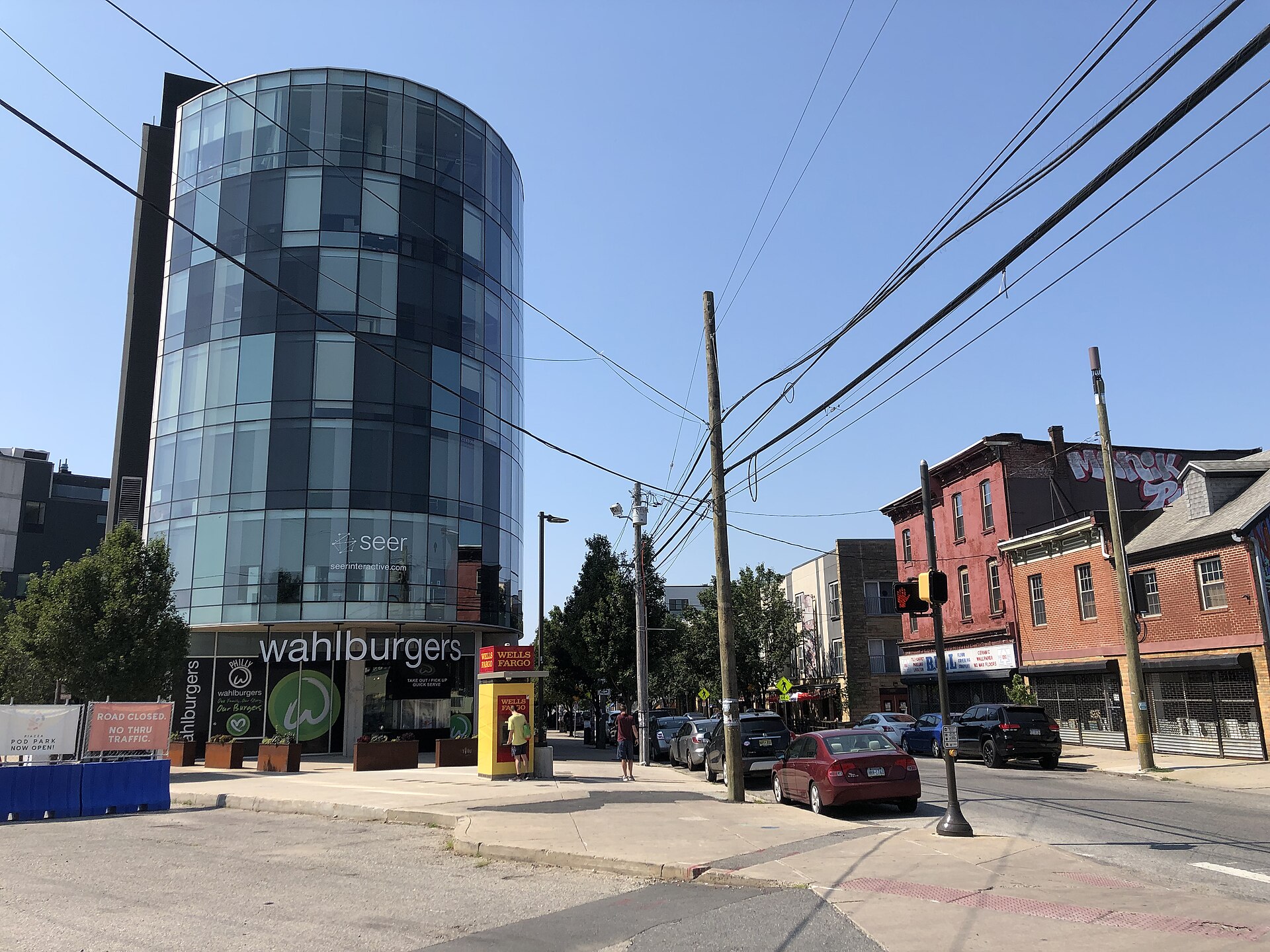
North of Old City and just east of Fishtown, Northern Liberties has spent the last two decades transforming from an industrial pocket of warehouses and rail spurs into one of Philadelphia’s most sought-after neighborhoods for buyers who want loft-scale square footage, exposed brick, and a walkable, restaurant-dense main street. For luxury buyers weighing city living, it occupies a distinct niche: bigger, more architecturally dramatic homes than you’ll typically find in Center City, at a price point that still reads as a relative value compared to Rittenhouse or Society Hill.
The character of the neighborhood
Northern Liberties, often shortened to “NoLibs” by locals, built its identity on adaptive reuse. Former factories, tanneries, and breweries have been converted into condominium buildings with soaring ceilings, oversized industrial windows, and open floor plans that are hard to replicate in a rowhome. Alongside those conversions sit newer construction condo and townhome developments, plus pockets of traditional Philadelphia rowhouses on quieter side streets. The result is a housing stock that’s more architecturally varied than most Philadelphia neighborhoods, which means buyers should go in with a clear sense of which style they actually want rather than assuming “loft” is the only option.
The neighborhood’s spine is Second Street and the area around the Piazza, a large public square ringed by restaurants, bars, and retail that anchors the social life of the area. Liberty Lands Park gives the neighborhood a genuine green space and dog-run culture that’s rare this close to Center City. The overall feel is younger and more casual than Rittenhouse Square, with a strong concentration of restaurants, breweries, and small businesses that give the area a lived-in, neighborhood-scale energy rather than a purely residential one.
Who tends to buy here
Northern Liberties draws a mix of buyers: young professionals and creatives who want loft space without a Center City price tag, downsizing empty nesters who want single-floor living with real square footage, and investors drawn to the neighborhood’s rental demand from Temple, Drexel, and the broader Philadelphia hospital and university employment base. At the luxury end, the buyer profile skews toward people who value design and space over ultra-central location — someone choosing a 2,200-square-foot converted loft with fourteen-foot ceilings over a smaller, more traditional Center City condo at a similar price.
What to weigh before buying
Building type matters more here than elsewhere
Because so much of the luxury stock is converted industrial buildings, condo buyers should look closely at the building’s structural history, how the conversion was engineered, and whether the association has a solid reserve fund for maintaining century-old brick and steel. Ask for the condo docs, recent reserve studies, and any history of special assessments before you get attached to a unit.
Parking and access
Street parking in Northern Liberties can be competitive, particularly near the Piazza and Second Street on weekend nights. Buildings with dedicated parking or garage spots command a premium, and it’s worth factoring that into your budget rather than assuming street parking will be simple.
Noise and proximity to nightlife
The neighborhood’s density of bars and restaurants is a major draw for some buyers and a dealbreaker for others. If you’re sensitive to street noise, walk the specific block you’re considering on a Friday or Saturday night before you write an offer — conditions vary block to block more than buyers expect.
Comparing Northern Liberties to nearby neighborhoods
Buyers cross-shopping Northern Liberties often also look at Fishtown, its neighbor to the northeast, and Old City, just to the south. Fishtown tends to have a somewhat younger, more residential rowhome feel with its own restaurant corridor along Frankford Avenue. Old City leans more historic and tourist-adjacent, with cobblestone streets and proximity to the Delaware River waterfront. Northern Liberties sits in between: more central than Fishtown, less historic and more contemporary than Old City, with a housing stock defined by conversion lofts that neither neighborhood quite matches.
Frequently asked questions
Is Northern Liberties a good long-term investment for a luxury buyer?
The neighborhood has seen sustained redevelopment and demand growth over the past two decades, and its mix of walkability, distinctive housing stock, and proximity to Center City continues to draw buyers. As with any neighborhood, value depends heavily on the specific building and block, so it’s worth having a conversation about current conditions and comparable sales before you commit.
Are there single-family homes in Northern Liberties, or is it mostly condos?
Both exist. The loft conversions and newer developments are largely condominiums, but the neighborhood also has traditional Philadelphia rowhomes, including some larger, updated trinities and townhomes on the quieter residential streets away from Second Street and the Piazza.
How does Northern Liberties compare on price to Center City?
Northern Liberties has historically priced below core Center City neighborhoods like Rittenhouse Square and Washington Square West, though the gap has narrowed as the neighborhood has matured. For buyers wanting maximum square footage and architectural character per dollar, it remains a competitive option relative to the city’s most established addresses.
Considering Northern Liberties or comparing it against other Philadelphia neighborhoods for your next home? James Kennedy specializes in luxury real estate across Philadelphia and South Jersey and can walk you through current inventory, building-specific considerations, and how the neighborhood fits your goals. Reach James at 215-267-8479 or jameskennedy@unlockedteam.com.
Leave a Reply