
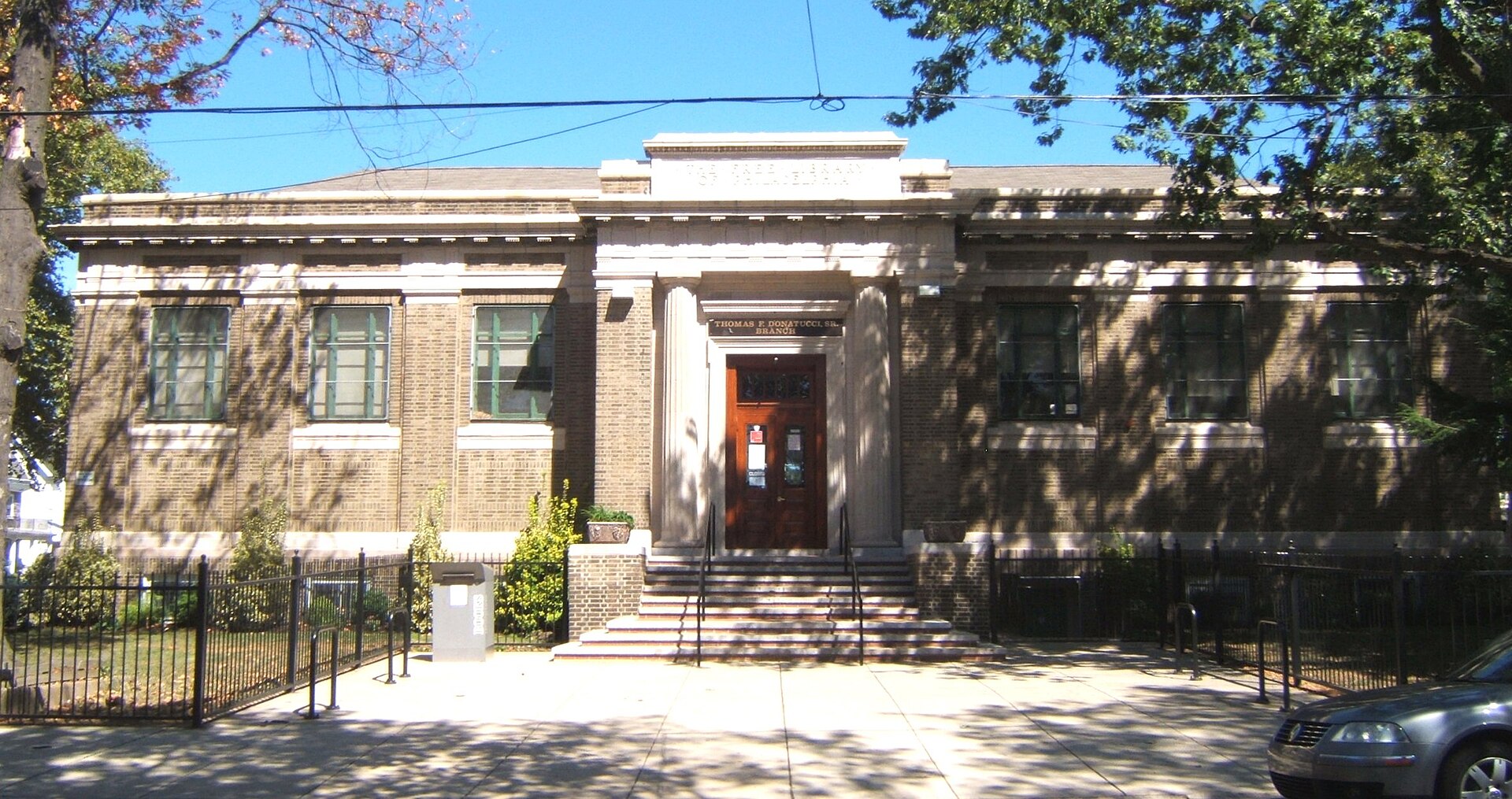
South Philadelphia is usually described in shorthand — rowhouses, the Italian Market, the stadiums. That shorthand misses two of the most distinctive residential pockets in the city. Girard Estate is a planned neighborhood of detached and semi-detached homes with front lawns, built in the early twentieth century on land left to the city by Stephen Girard. Packer Park, a few blocks south, mixes mid-century singles with newer townhome and condominium development. Neither looks like the rest of South Philadelphia, and for buyers who want space, parking, and a real yard without leaving the city, that is precisely the appeal.
Girard Estate: a garden suburb inside the city
The Girard Estate Historic District covers roughly the blocks between 20th and 23rd Streets and Porter and Shunk Streets. The homes were built in the 1900s and 1910s under a unified plan, and the result is unusual for Philadelphia: detached and twin houses set back from the sidewalk, with lawns, driveways, and a mix of architectural styles — Colonial Revival, Mission, Tudor, and Craftsman among them — executed with real quality.
What buyers notice first is the light. Detached and semi-detached construction means windows on three or four sides, which is a fundamentally different living experience from a mid-block rowhouse. What buyers notice second is the parking. Many homes have a driveway or garage, which in Philadelphia is close to a luxury in itself.
What to expect from the housing stock
- Original detail. Many homes retain leaded glass, built-ins, quarter-sawn oak, and original tile. Homes that kept these features command a premium, and rightly so.
- Systems age. A century-old house has usually been updated at least once. Ask when, by whom, and with permits. Electrical service capacity and heating system age are the two most common surprises.
- Historic district considerations. Exterior changes in a designated district are subject to review. If you are planning to alter the facade, windows, or roofline, understand the process before you buy, not after.
Packer Park and the surrounding blocks
South of Girard Estate, Packer Park has a different feel. Much of the original housing dates to the post-war period — brick singles and twins on wide streets with driveways and yards — and more recent development has added townhomes and condominium buildings with contemporary layouts, garages, and lower maintenance obligations.
This mix matters. A buyer who wants a period home with character looks at Girard Estate. A buyer who wants three bedrooms, an attached garage, a small yard, and no plaster to patch often finds a better fit in Packer Park. Both sit within the same broad neighborhood and share the same access advantages.
Location, access, and daily life
The practical case for this part of the city is strong:
- Highway access. I-95 and the Walt Whitman Bridge are minutes away, which makes South Jersey, the airport, and the shore genuinely convenient.
- The airport. Frequent travelers consistently rate this as one of the best trade-offs in Philadelphia — you can be at the terminal in a fraction of the time it takes from most Center City addresses.
- Transit. The Broad Street Line runs to Center City and terminates at the sports complex, giving a car-free option to work downtown and to games.
- Green space. FDR Park sits just south, offering acreage, trails, and water that most city neighborhoods cannot match.
- Food. East Passyunk’s restaurant corridor and the Italian Market are both a short drive or a manageable walk depending on where you land.
The stadium complex is the double-edged part of the equation. Game days bring traffic and parked cars. Some residents barely register it; others find it genuinely disruptive. Visit on an event day before you commit — this is the single most useful due diligence you can do in this neighborhood.
How the value proposition compares
Buyers who look here are usually weighing it against Center City or the Main Line. The comparison generally shakes out like this: for a given budget, this part of South Philadelphia typically delivers more square footage, more outdoor space, and easier parking than a comparable Center City property, while keeping you inside city limits with city tax and transit advantages. What you give up relative to Rittenhouse or Fitler Square is the density of walkable retail and dining immediately outside your door.
Against the suburbs, the trade is different — you accept smaller lots in exchange for a much shorter commute, city amenities, and the option of a genuinely car-light life. Philadelphia’s wage tax and school considerations are real factors for many families, and they belong in the analysis honestly rather than as an afterthought.
Due diligence specific to this area
- Confirm historic designation. Whether a specific address is inside the historic district changes what you can do to the exterior. Verify rather than assume.
- Check for prior tax abatements. Newer construction may carry a residential abatement with a remaining term. Understand what the tax bill looks like when it expires.
- Inspect the roof and the drainage. Flat and low-slope roofs are common. Age, membrane type, and drainage detail matter more than they would on a pitched suburban roof.
- Verify parking. A curb cut and driveway are valuable and must be legal. Confirm the curb cut is permitted and that the garage is a legal use.
- Walk the block twice. Once on a weekday morning, once during an event at the stadiums.
Who this neighborhood suits
Girard Estate and Packer Park suit buyers who want a house rather than a condominium, who value a driveway and a yard, and who want to stay in Philadelphia. They suit frequent travelers, families who want space without a suburban commute, and buyers moving from the suburbs who are not ready to give up off-street parking. They suit long-term owners more than short-horizon buyers, because the character of these blocks is stable and the value proposition compounds with time spent enjoying it.
Frequently asked questions
What makes Girard Estate different from the rest of South Philadelphia?
It was built as a unified plan on land bequeathed to the city, producing detached and semi-detached homes with lawns, driveways, and varied architectural styles instead of continuous rowhouse blocks. The result is a low-density, garden-suburb feel that is genuinely rare inside Philadelphia city limits.
Is the stadium complex a problem for residents?
It depends heavily on the specific block and on your tolerance. Traffic and parking pressure increase around events, and some streets are affected far more than others. The reliable way to evaluate it is to visit the exact address during an event rather than relying on a general impression of the neighborhood.
Can I renovate a home in the historic district?
Interior work is generally straightforward. Exterior changes visible from the street — windows, doors, facade materials, rooflines — are subject to historic review in a designated district. Plan for a longer approval timeline and involve an architect or contractor experienced with the process before you finalize a renovation budget.
If you want to see what your budget buys in Girard Estate, Packer Park, or anywhere in Philadelphia, I am happy to walk you through current inventory and recent sales without any pressure. Contact James Kennedy at 215-267-8479 or jameskennedy@unlockedteam.com.
Leave a Reply