
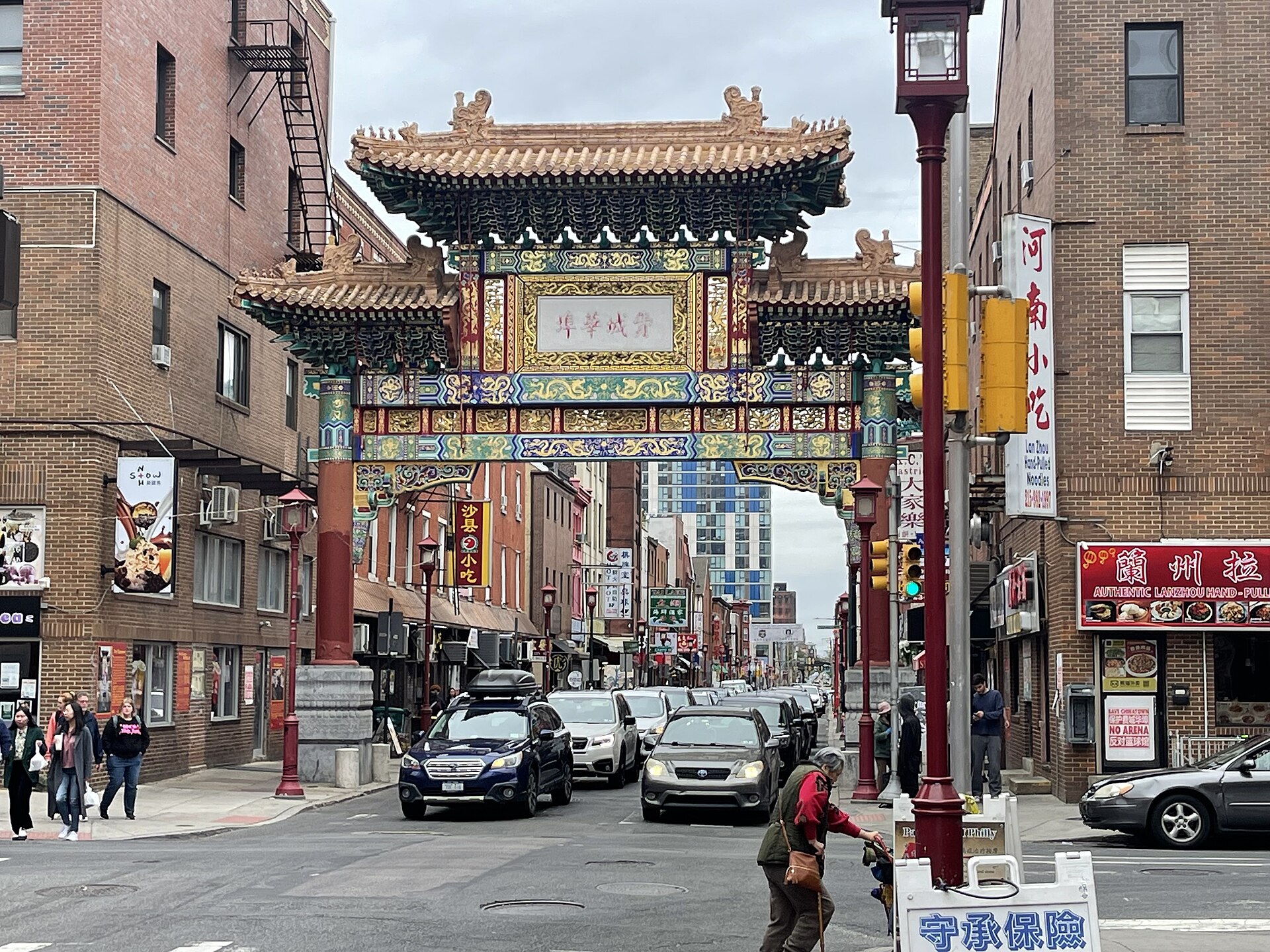
Callowhill and Chinatown North sit in the seam between Center City and the neighborhoods north of Vine Street. For decades this was warehouse and light-manufacturing territory, which is exactly why it now holds Philadelphia’s deepest concentration of authentic industrial loft conversions. Buyers who want twelve-foot ceilings, exposed timber and steel, and windows measured in feet rather than inches tend to end up here eventually. It is a distinctive market with its own rules, and it rewards buyers who understand what they are looking at.
Where the neighborhood actually is
Boundaries here are informal and locals argue about them. In practice, Callowhill runs roughly from Vine Street north toward Spring Garden Street, and from Broad Street east toward the Delaware River side of Old City. Chinatown North, sometimes marketed as the Loft District or Eraserhood, is the eastern portion above Vine. The area borders Spring Garden to the northwest, Northern Liberties to the northeast, and Chinatown proper to the south.
The practical consequence for a buyer is walkability in every direction. Reading Terminal Market, the Convention Center, and the Center City core are a short walk south. Northern Liberties dining is a short walk east. Jefferson Station and the Broad Street Line put the airport and the suburbs within easy reach without a car.
The housing stock
Authentic loft conversions
The signature product is the converted industrial building: former textile mills, printing houses, and warehouses turned into condominiums, usually between the 1990s and the 2010s. Units frequently run well above the square footage of comparable Center City condos, with open floor plans, original columns, and oversized industrial sash windows. Some buildings converted units as raw shells that owners finished individually, which means quality varies dramatically from door to door inside the same building.
Newer construction
More recent ground-up condominium and townhome projects have filled surface lots and smaller parcels, particularly closer to Spring Garden Street. These typically offer garage parking, elevators, modern mechanical systems, and outdoor space on roof decks. They trade some of the loft character for predictability, and for many high-end buyers that trade is worth making.
Penthouse and top-floor units
The strongest resale performers in this market are almost always the top-floor and corner units with skyline views and private roof access. Because the surrounding building heights are uneven, view protection matters enormously. A unit whose views depend on an adjacent surface parking lot staying empty is carrying a risk that the price should reflect.
The Rail Park and the direction of the neighborhood
The elevated former Reading Railroad viaduct that cuts through Callowhill has been partially converted into the Rail Park, an elevated linear park. The first phase opened along a quarter-mile stretch, and long-term plans contemplate extending it substantially. Whatever the eventual build-out, the existing segment has already changed how the neighborhood reads to buyers: it created a genuine public amenity in an area that historically had almost none.
Proximity to the park has become a real pricing factor. If you are comparing two similar lofts, one facing the viaduct and one facing a service alley, expect the difference to show up in both price and future liquidity.
Lifestyle and daily life
This is not a neighborhood of manicured squares and boutique rows. It is a working, textured part of the city, with art spaces, music venues, long-standing Chinatown restaurants a block or two south, and a growing number of coffee shops and bars at street level. Grocery options include Chinatown markets and Center City supermarkets a short walk away. Whole Foods and Trader Joe’s are reachable on foot from most of the area.
Buyers accustomed to Rittenhouse should visit at multiple times of day. The streetscape changes noticeably between a Tuesday morning and a Saturday night, and the Vine Street Expressway trench creates a genuine barrier between the north side and Center City proper at certain crossings.
What to check before you buy a loft
- The conversion documents. Ask when the building was converted, by whom, and what was actually replaced. A 1998 conversion that reused original plumbing stacks is a different asset than one that replaced them.
- Reserves and special assessments. Older masonry buildings carry expensive envelopes: roofs, facades, and windows. Read several years of association minutes, not just the current budget.
- Window condition and thermal performance. Original industrial steel sash is beautiful and often extremely inefficient. Replacement in a historically certified building can require approvals.
- Sound transmission. Open-plan lofts with hard surfaces carry noise between units and from the street. Visit in the evening.
- Parking. Deeded garage parking is scarce in conversions and adds meaningful value. Confirm whether a space is deeded, leased, or merely available.
- Tax abatements. Some conversion and new-construction units carry or carried Philadelphia’s residential tax abatement. Confirm the remaining term, because the post-abatement tax bill changes your carrying cost.
- Ceiling and column layout. Structural columns cannot move. Make sure the floor plan works for how you actually live before falling for the volume.
Who this neighborhood suits
Callowhill and Chinatown North tend to work well for design-driven buyers, art collectors who need wall space and ceiling height, professionals who want to walk to Center City offices, and second-home buyers who want a city foothold with more square footage than a Rittenhouse condo of the same price. It suits buyers who value character and space over polish and uniformity.
It is a weaker fit for buyers whose priorities are a doorman-and-amenity building, a traditional residential streetscape, or a short walk to a neighborhood elementary school. Those buyers are usually happier in Fitler Square, Society Hill, or the near suburbs.
Frequently asked questions
Is Callowhill a good investment compared to Rittenhouse Square?
They behave differently. Rittenhouse is a mature, supply-constrained market that holds value steadily. Callowhill has more room for appreciation tied to neighborhood improvement, and correspondingly more variability. Buyers who want stability lean Rittenhouse; buyers with a longer horizon and tolerance for change often prefer Callowhill. For a current read on how each area is performing, contact James directly.
Can I get parking with a loft here?
Sometimes. Deeded garage spaces exist in newer buildings and in some conversions, and surface and garage rentals are available nearby. Because parking is not guaranteed, confirm it in writing before removing contingencies, and treat a deeded space as a distinct value item rather than an assumption.
Are loft condominiums harder to finance?
They can be. Lenders look closely at the percentage of owner-occupied units, commercial space within the building, association reserves, and any pending litigation. On higher-balance loans this scrutiny increases. Getting a lender to review the condominium questionnaire early in the process prevents surprises late.
If you are weighing a loft purchase in Callowhill or Chinatown North, or comparing it against another Center City neighborhood, James Kennedy can walk you through the specific buildings, their association histories, and what is actually trading right now. Call James at 215-267-8479 or email jameskennedy@unlockedteam.com.
Leave a Reply