
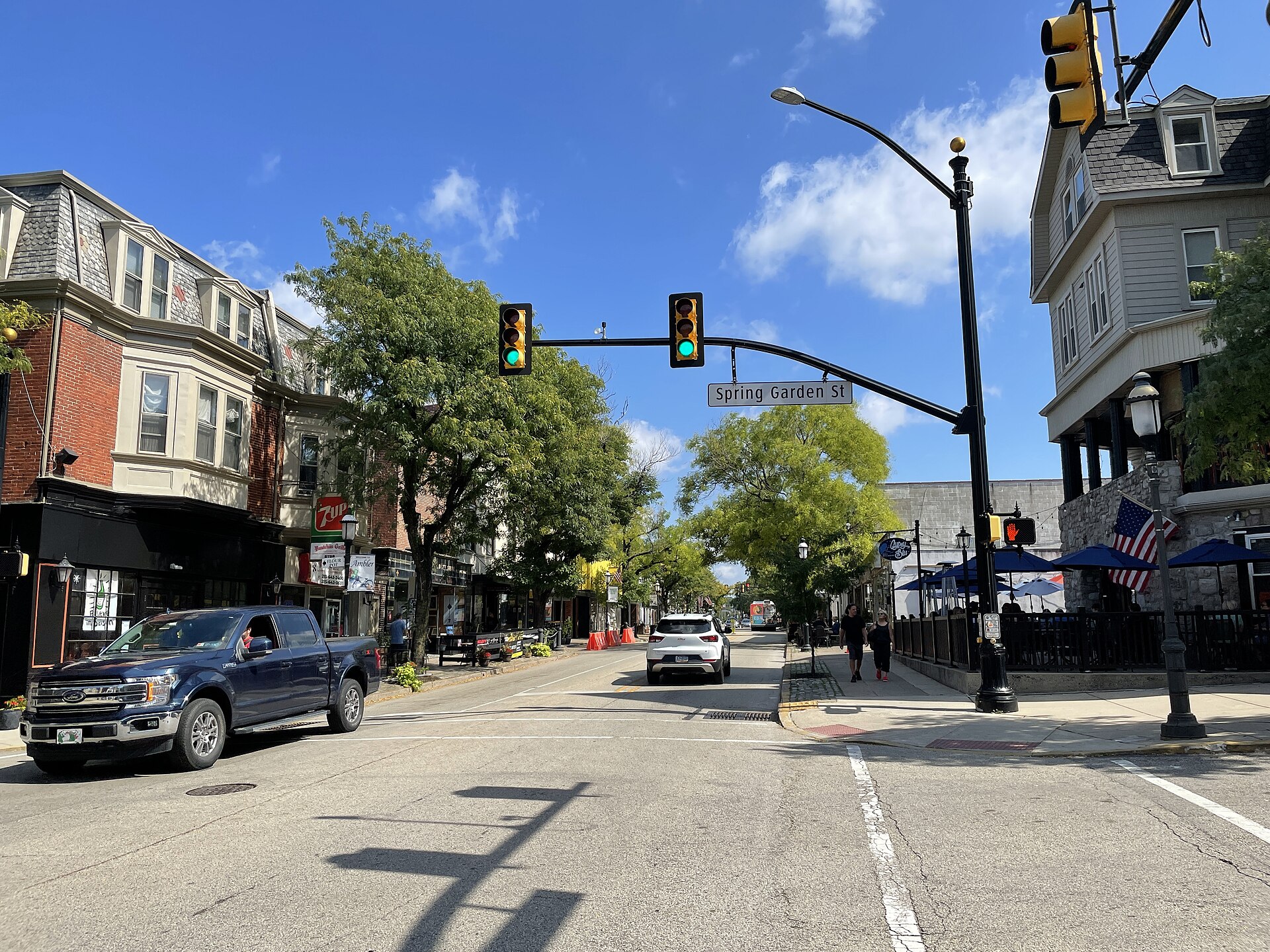
Ambler sits in the middle of one of Montgomery County’s most desirable corridors, about forty-five minutes northwest of Center City by car and a direct ride on SEPTA’s Lansdale/Doylestown Regional Rail line. For luxury buyers, it offers something the Main Line often cannot at the same price: a genuinely walkable downtown, a compact and characterful housing stock, and quick access to the larger estate properties of Whitpain, Lower Gwynedd, and Upper Dublin townships that surround it. This guide covers what high-end buyers should understand about the Ambler area before they start touring.
Where Ambler sits and why that matters
Ambler Borough itself is small, roughly a square mile, but the address is commonly used for a much larger area. Homes with an Ambler mailing address may sit in Ambler Borough, Upper Dublin Township, Whitpain Township, Lower Gwynedd Township, or Horsham Township. Those are different municipalities with different tax rates, different school districts, and very different housing profiles.
This is the single most important thing an out-of-area buyer needs to grasp. Two houses listed as “Ambler, PA” can differ meaningfully in property tax burden and school assignment. Before falling in love with a listing, confirm the municipality, the school district, and the actual tax figure from the county assessment record rather than relying on a listing summary.
The housing stock at the high end
Ambler-area luxury inventory falls into a few clear categories:
- In-borough Victorians and Foursquares. Ambler grew as an industrial company town in the late nineteenth century, and the borough retains large, detailed period homes on tree-lined streets within walking distance of Butler Avenue. These appeal to buyers who want character and walkability over acreage.
- Township estate homes. Whitpain, Lower Gwynedd, and Upper Dublin hold the larger properties: mid-century and later custom builds on one to several acres, often with mature landscaping, pools, and detached garages. This is where most of the area’s highest-priced sales occur.
- Newer luxury construction and enclave developments. Builders have added small clusters of high-specification homes throughout the townships, frequently on subdivided former farm parcels. These carry newer systems and open floor plans but sit on smaller lots than their price might suggest elsewhere in the county.
- Carriage homes and upscale townhomes. A meaningful share of the market serves buyers downsizing from larger county estates who still want high finishes, first-floor primary suites, and low exterior maintenance.
Downtown Ambler and daily life
Butler Avenue is the reason many buyers choose Ambler over comparably priced suburbs. The downtown supports independent restaurants, a long-running theater, a farmers market, and neighborhood retail within a few blocks, and the borough programs regular street events through the year. For buyers coming from Center City who want space without giving up the ability to walk to dinner, this combination is unusual in Montgomery County.
The regional rail station sits at the edge of downtown, which matters for resale. Homes within comfortable walking distance of both the station and Butler Avenue tend to hold buyer interest across market cycles, because that walkability cannot be replicated by new construction farther out.
Commuting and access
Ambler is served by SEPTA Regional Rail into Suburban Station and Jefferson Station, and by the Pennsylvania Turnpike interchange at Fort Washington, which connects onward to I-476 and I-95. Buyers who split time between Philadelphia and New York, or who travel frequently, should also weigh drive time to Philadelphia International Airport, which is meaningfully longer than from the Main Line.
If commuting is a priority, drive the actual route during a weekday rush before committing. Township roads in this part of the county carry more traffic at peak hours than a map suggests.
What luxury buyers should investigate here specifically
Environmental history
Ambler’s industrial past means portions of the borough and adjacent land carry a documented remediation history. This information is public and does not affect most residential properties, but any buyer at this price point should have their agent pull the relevant environmental records for the parcel and the surrounding area and review them before the end of the inspection period.
Older systems in period homes
Large Victorians frequently retain original knob-and-tube wiring in unrenovated sections, oil tanks (active or abandoned), and unsealed stone foundations. Budget for specialist inspections rather than a general one, and ask directly about any buried oil tank, including a tank sweep where warranted.
Wells, septic, and acreage
Township properties on larger lots may be on well water and private septic rather than public utilities. Both require their own inspections, and septic capacity can constrain future additions. Confirm the permitted bedroom count on the septic design before planning an expansion.
Zoning and historic overlays
Ambler Borough and several surrounding townships apply zoning and design standards that affect additions, outbuildings, and exterior changes. If your plans include a pool house, an accessory dwelling, or a significant addition, verify feasibility with the municipality before closing, not after.
How to approach an offer in this market
Luxury inventory in the Ambler area is thin by nature. In any given month there may be only a handful of genuinely comparable high-end homes across the surrounding townships, which makes mechanical comparable analysis harder and makes local judgment more valuable. A well-supported offer here usually rests on a small set of closely reasoned comparables, an honest read of how long similar homes have taken to sell, and a clear understanding of what the specific property’s land, systems, and finishes are worth relative to replacement cost.
Terms often matter as much as price. Sellers of estate properties are frequently coordinating their own next move, and flexibility on settlement date, post-settlement occupancy, or inspection scope can carry real weight. For current pricing, days on market, and what is actually trading in each township, reach out for a market briefing rather than relying on a public portal estimate.
Frequently asked questions
Is Ambler considered part of the Main Line?
No. The Main Line refers to the communities along the former Pennsylvania Railroad main line in Lower Merion, Radnor, and Tredyffrin townships, such as Bryn Mawr, Villanova, and Wayne. Ambler is in central Montgomery County on a different rail line and has its own distinct character, generally offering more walkable-downtown living and, in many cases, more house and land per dollar than the core Main Line towns.
Which school district serves Ambler?
It depends on the property. Homes with an Ambler mailing address may fall into Wissahickon, Upper Dublin, or North Penn school districts depending on the municipality the parcel sits in. Because assignment follows the parcel rather than the mailing address, always confirm the district for the specific property before making an offer.
What should I expect the buying timeline to look like?
For a high-end Ambler-area purchase, plan on a longer runway than a standard suburban transaction. Specialist inspections on older or acreage properties, well and septic testing, jumbo financing underwriting, and township record research all take time. A settlement period of forty-five to sixty days is common, and coordinating early with your lender and agent is the most reliable way to avoid extensions.
Thinking about buying or selling in Ambler or the surrounding Montgomery County townships? James Kennedy specializes in luxury real estate across Philadelphia and South Jersey and can walk you through current inventory, township-by-township tax and school differences, and what a competitive offer looks like right now. Call James at 215-267-8479 or email jameskennedy@unlockedteam.com to start the conversation.
Leave a Reply