
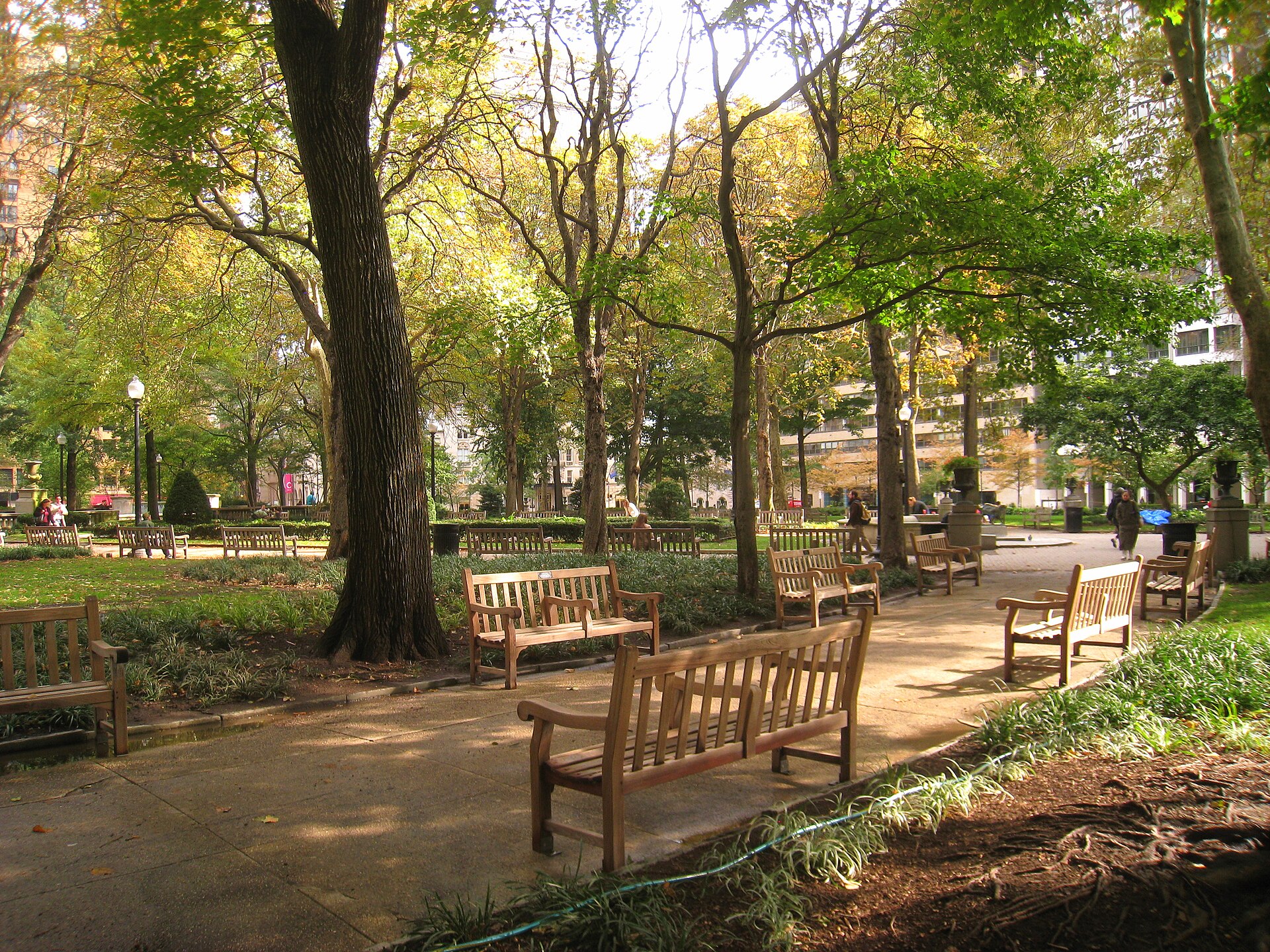
Ask almost anyone in Philadelphia where the city’s most prestigious address is, and the answer comes back the same: Rittenhouse Square. Built around one of William Penn’s original five public squares, the neighborhood has spent more than a century as the anchor of Center City luxury living. For buyers weighing a move into the city, understanding what makes Rittenhouse different from Philadelphia’s other high-end pockets is the first step toward deciding whether it’s the right fit.
What the neighborhood actually is
Rittenhouse Square refers both to the park itself and to the surrounding blocks that radiate out from it, roughly bounded by Broad Street to the east, the Schuylkill River to the west, Market Street to the north, and South Street to the south, though the neighborhood’s true character is concentrated in the several blocks immediately around the park. It is a dense, walkable, largely pre-war neighborhood layered with 20th-century high-rises, making it one of the few places in the region where true high-rise condo living exists alongside classic brownstone and townhouse blocks.
The housing stock
Rittenhouse offers more architectural range than its reputation for glass towers suggests.
- Pre-war and post-war high-rise condominiums — buildings along the Square and on Walnut and Locust Streets offer full-service living with doormen, concierge staff, and in many cases health clubs and swimming pools.
- Newer luxury towers — several more recent developments have added contemporary condos with larger floor plates, updated mechanical systems, and amenity packages built for today’s buyer.
- 19th-century townhouses — on the quieter side streets, particularly toward Delancey and Panama Streets, restored townhouses offer the space and privacy of a single-family home in a neighborhood best known for vertical living.
Because the building stock spans more than a century, condo fees, reserve fund health, and building bylaws vary enormously from one address to the next. A careful review of a building’s financials is essential before writing an offer here, regardless of how polished the unit itself looks.
Who buys here
Rittenhouse draws a genuinely mixed buyer pool: empty nesters selling a Main Line or Chester County estate and trading yard work for a doorman, executives who want a five-minute walk to Center City offices, and second-home buyers who want a true urban pied-a-terre with restaurants, museums, and Rittenhouse Square’s park life outside the front door. What unites most buyers is a preference for walkability and lock-and-leave convenience over square footage.
Daily life around the Square
Few Philadelphia neighborhoods pack in as much within a short walk. Walnut Street’s retail corridor, some of the city’s best-regarded restaurants, the Kimmel Cultural Campus, and the Avenue of the Arts are all within easy reach, and the park itself functions as a genuine neighborhood living room — a place for morning coffee, dog walks, and the weekend flower market. For buyers coming from the suburbs, this density is either the entire appeal or a genuine adjustment; it’s worth spending real time in the neighborhood at different hours before committing.
What to weigh before buying
A few practical considerations come up repeatedly with Rittenhouse buyers:
- Parking — few older buildings include deeded parking, and where it exists it commands a real premium. Buyers who need a car should confirm parking availability early in a search rather than assuming it comes with the unit.
- Noise and exposure — units directly on Walnut or Locust Streets can be busier than those on quieter side streets; asking to visit at different times of day is worthwhile.
- Building financials — for condos, request the reserve study, recent meeting minutes, and any pending special assessments before going under contract.
- Resale depth — Rittenhouse consistently ranks among the most liquid luxury submarkets in the city, which matters to buyers thinking about their eventual exit as much as their purchase.
How Rittenhouse compares to nearby neighborhoods
Buyers cross-shopping Rittenhouse often also look at Fitler Square for a quieter, more residential feel a few blocks west, or Washington Square West for a slightly more relaxed price point with similar walkability. None of these substitute exactly for Rittenhouse’s combination of address prestige, retail density, and building selection, but each offers a genuine trade-off worth understanding before you commit to a search radius.
Frequently asked questions
Is Rittenhouse Square mostly condos, or can you find single-family homes?
The neighborhood is dominated by condominiums, particularly near the park itself, but restored 19th-century townhouses do exist on the quieter side streets, especially toward Delancey and Panama Streets. Buyers set on a true single-family home may need to widen their search slightly or work with an agent who tracks off-market inventory closely.
Do Rittenhouse condo buildings allow short-term or seasonal rentals?
Rental policies vary significantly by building and are set independently by each condo association. Some buildings prohibit rentals entirely for a period after purchase, while others allow them with restrictions. This should always be confirmed in the building’s bylaws before a second-home or investment buyer makes an offer.
How does pricing in Rittenhouse compare to the Main Line or Chester County?
Because Rittenhouse buyers are generally paying for location, walkability, and building amenities rather than land and square footage, the per-square-foot math looks different than in the suburbs. A meaningful comparison depends heavily on the specific building, floor, and unit condition, which is exactly the kind of current, address-specific analysis worth getting from an agent rather than a general guide.
If you’re considering a move into Rittenhouse Square or want a clear-eyed comparison against other Center City and Main Line options, James Kennedy can walk you through current inventory and building-by-building trade-offs. Reach James at 215-267-8479 or jameskennedy@unlockedteam.com.
Leave a Reply