
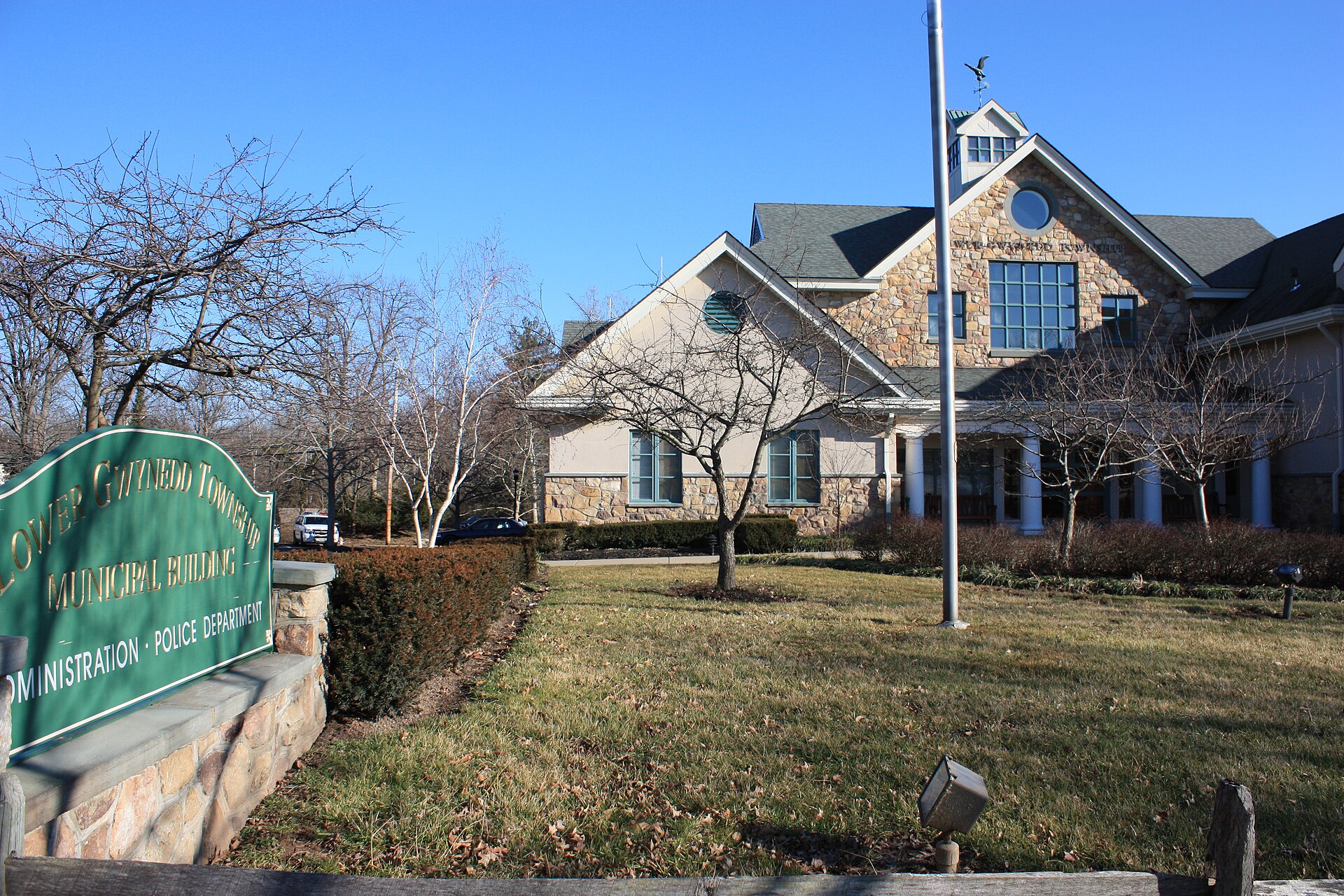
Montgomery County has no shortage of comfortable suburbs, but a small number of them combine real acreage, mature landscaping, and a short drive to both Center City and the Route 202 corridor. Lower Gwynedd Township — and the village of Spring House at its center — is one of them. For buyers looking in the upper price tiers, this is a part of the Philadelphia suburbs where a stone farmhouse on two acres can sit a few minutes from a grocery run, a train station, and a golf club.
Where Lower Gwynedd and Spring House sit
Lower Gwynedd Township is in central Montgomery County, bordered roughly by Ambler and Whitpain to the south and east, Upper Gwynedd and North Wales to the west, and Whitemarsh farther down the Bethlehem Pike corridor. Spring House is the crossroads village at the intersection of Bethlehem Pike and Norristown Road, and it functions as the township’s practical center: a few shopping centers, restaurants, professional offices, and the sense of a hub without the density of a borough downtown.
Neighboring Gwynedd Valley, with its own rail station and rolling estate lots, is often discussed in the same breath. Buyers touring here frequently move between Lower Gwynedd, Gwynedd Valley, Ambler, Blue Bell, and Whitpain without ever leaving a fifteen-minute radius.
What the housing stock looks like
The high end of this market is more varied than a single subdivision profile would suggest. Broadly, buyers encounter four categories:
- Historic stone homes and farmhouses. Eighteenth- and nineteenth-century stone construction, often expanded over generations, sometimes on original acreage. These reward buyers who appreciate craftsmanship and are prepared for the maintenance profile of old masonry.
- Mid-century estate properties. Custom homes built from the 1950s through the 1970s on generous lots, frequently with mature trees and privacy that newer construction cannot replicate for decades.
- Later custom and semi-custom construction. Homes built from the 1990s forward with the room counts, ceiling heights, and garage capacity contemporary buyers expect.
- Newer luxury infill and small enclaves. Occasional pockets of high-specification new construction, typically on smaller lots than the older estates but with current systems and finishes.
Because these categories trade so differently, a price per square foot pulled across the whole township tells you very little. Value in Lower Gwynedd is set street by street, and often lot by lot.
Schools and institutions
Lower Gwynedd is served by the Wissahickon School District, and school reputation is a real component of demand in this part of Montgomery County. The area is also close to a cluster of independent schools and to Gwynedd Mercy University. Buyers with school-age children should confirm attendance boundaries for a specific address rather than relying on a township-level assumption — boundaries can and do split neighborhoods.
Getting around
The commuting picture is one of the strongest arguments for this area:
- Regional rail. SEPTA’s Lansdale/Doylestown Line serves Gwynedd Valley, Penllyn, and Ambler stations, putting Center City within a straightforward one-seat ride.
- Highways. The Pennsylvania Turnpike’s Fort Washington interchange and Route 309 handle east-west and north-south driving, and Route 202 connects to the King of Prussia and Blue Bell employment corridors.
- Everyday errands. Ambler and Blue Bell absorb most day-to-day shopping and dining, with Spring House itself covering the basics.
Open space and lifestyle
Wissahickon Creek runs through the township, and the surrounding preserved land, trails, and township parks are a meaningful part of why buyers choose here over a denser suburb. Several private clubs and golf courses sit within a short drive, and the Wissahickon Trail corridor gives residents genuine walking and running mileage without driving into the city.
What to evaluate before you make an offer
Systems and infrastructure
Older homes on larger lots in this area may be on well water, on-site septic, or a combination of public and private utilities. Confirm what serves the property, when systems were last serviced, and what replacement would cost. On historic stone homes, pay particular attention to roof condition, pointing, drainage away from the foundation, and any prior stucco or coating applied over original masonry.
Land, easements, and preservation
Acreage in Lower Gwynedd sometimes carries conservation easements, deed restrictions, or historic designations that limit what can be added, subdivided, or demolished. None of these are inherently negative, but they should be read before the offer, not after inspection.
Renovation potential
Many of the best long-term values here are homes with excellent bones and dated interiors. Understanding township zoning, setback rules, and the permit timeline for additions is essential if your plan depends on expanding the footprint. Build the review of these constraints into your inspection window.
Flood and stormwater
Properties near creek corridors deserve a careful look at floodplain mapping, stormwater management, and historic water intrusion. This is a routine part of due diligence for creekside lots throughout Montgomery County.
How this market tends to behave
The upper tier in Lower Gwynedd is a low-inventory market. In any given month, the number of genuinely comparable homes above the seven-figure threshold may be small, which means that pricing is driven more by the specific attributes of a property — acreage, privacy, condition, architectural quality — than by broad averages. For sellers, that argues for precise positioning and strong presentation. For buyers, it argues for being ready to move quickly when the right property appears, and for having a clear view of what you would pay before it does.
Rather than rely on general figures, ask for a current, address-specific analysis of recent sales and active competition before you price a listing or write an offer.
Who this area suits
Lower Gwynedd and Spring House tend to fit buyers who want land and privacy without a long drive to services, who value mature neighborhoods over new development, and who want a workable commute to both Philadelphia and the western suburbs. Buyers who prioritize a walkable downtown at their doorstep often gravitate to Ambler or Doylestown instead; buyers who want the largest possible parcels sometimes push north into Bucks County.
Frequently asked questions
Is Spring House a separate town from Lower Gwynedd?
Spring House is a village and mailing address within Lower Gwynedd Township, not a separate municipality. Properties with a Spring House address are governed by Lower Gwynedd Township, so zoning, permits, and township services all run through the township.
What kind of lot sizes should luxury buyers expect?
Lot sizes vary widely, from under half an acre in established neighborhoods to multiple acres on former farm parcels and estate properties. Because the range is so wide, the lot is often the single largest driver of value differences between two otherwise similar homes.
How does Lower Gwynedd compare with Blue Bell or Ambler?
Blue Bell generally offers more later-built custom housing and country-club neighborhoods, Ambler offers a walkable borough downtown with train access, and Lower Gwynedd sits between them with more historic stone housing and larger, more wooded parcels. Many buyers tour all three before deciding which trade-off they prefer.
If you are considering a purchase or sale in Lower Gwynedd, Spring House, or the surrounding Montgomery County market, James Kennedy can give you a current, property-specific read on values, competition, and strategy. Call 215-267-8479 or email jameskennedy@unlockedteam.com to start the conversation.
Leave a Reply