
Most home-buying advice about schools assumes you are shopping for a public district. For a large share of luxury buyers in the Philadelphia region, that is not the question at all. Greater Philadelphia has one of the deepest concentrations of independent, Quaker, Catholic, and specialized schools in the country, and families who intend to use them approach the home search from a different angle: not “which district is best?” but “where do I want to live given the school we have chosen, and how does that choice affect what I should buy?”
This guide is about geography and real estate strategy, not about ranking schools. Which school suits a particular child is a decision for the family and the admissions process. What an agent can help with is the part that touches your house.
How the region’s independent schools are clustered
Independent schools in the Philadelphia area are not evenly distributed. They cluster along a handful of corridors, and understanding those clusters is the fastest way to narrow a home search.
The Main Line corridor
Running west from Bala Cynwyd through Lower Merion, Haverford, Radnor, and out toward Malvern and Newtown Square, this corridor hosts a dense concentration of long-established independent day schools. Families who choose here often buy in Gladwyne, Villanova, Haverford, Bryn Mawr, Wayne, or Newtown Square, where a school run can be ten to twenty minutes and where the surrounding towns are built around that rhythm.
Northwest Philadelphia
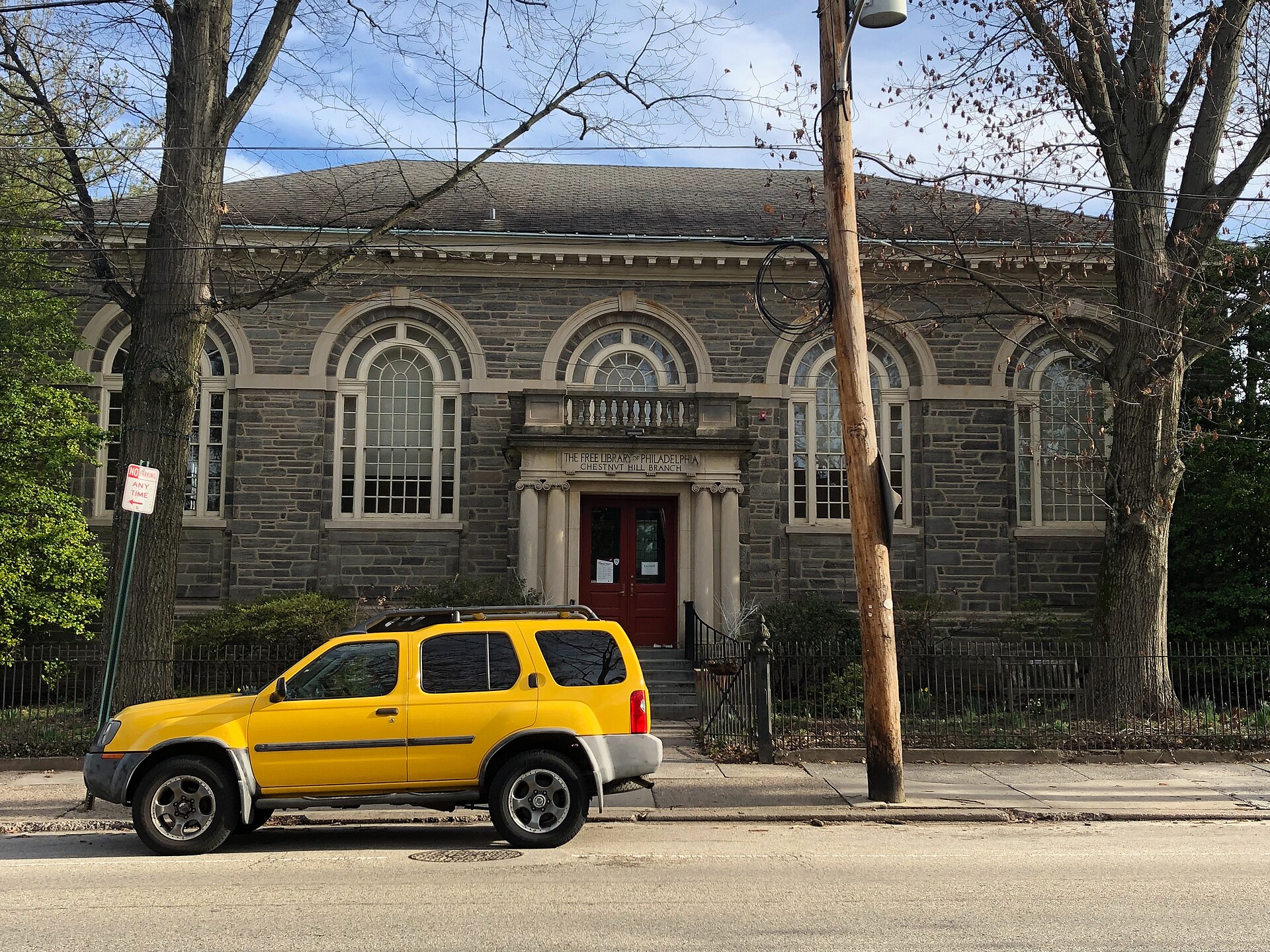
Chestnut Hill, Mount Airy, and Germantown host several of the city’s best-known independent and Quaker schools, and the neighborhoods around them — stone Colonial Revival and Wissahickon-schist homes on generous lots — draw families who want independent schooling without leaving the city. Roxborough, East Falls, and nearby Montgomery County townships extend the practical radius.
Center City and the near river wards
Several independent and Friends schools operate in and around Center City, which makes a walkable urban life genuinely workable for families. Buyers in Society Hill, Washington Square West, Rittenhouse, Fitler Square, and Queen Village frequently choose a home specifically because a child can walk or take a short ride to school.
South Jersey
Camden and Burlington County have their own set of Friends, Catholic, and independent schools, concentrated around Haddonfield, Moorestown, Cherry Hill, and Medford. Families here often combine an independent school with a short bridge commute into Philadelphia for work.
Bucks, Chester, and Delaware Counties
Further out, boarding and day options in Bucks and Chester County serve families who want land — several acres, barns, riding facilities — and are willing to trade proximity for space.
The commute is the real constraint
Families consistently underestimate how much a daily school run shapes life. Before you commit to a home, do the honest math:
- Drive it at the actual hour. A route that takes fifteen minutes at 11 a.m. can take twice that at 7:45 a.m. Test the drive on a weekday during the school year, in both directions.
- Count the trips. Morning drop-off, afternoon pickup, athletics, rehearsals, weekend games. A family with two children at two schools may be making six or more trips a day.
- Ask about bus service. Pennsylvania school districts are generally required to provide transportation to nonpublic schools within certain distance limits, and New Jersey has its own rules and aid-in-lieu provisions. Whether a specific address qualifies depends on the district and the distance — confirm it for the exact property.
- Consider the second commute. A home that is perfect for school may add half an hour each way to a parent’s commute to Center City, King of Prussia, or Cherry Hill. Optimize for the household, not one variable.
How this should change what you buy
Once school is settled, a few property features tend to matter more than buyers expect:
- Driveway and parking. Carpools, teenage drivers, and visiting families make off-street parking disproportionately valuable, especially in the city.
- A workable mudroom and drop zone. Sports equipment, instruments, and uniforms need somewhere to live. This is one of the most-cited regrets among families who bought beautiful homes with no staging area near the entry.
- Study space that is not a bedroom. Two or three quiet, well-lit workspaces matter more than a formal living room for most school-age households.
- Proximity to the pack. Living near other families at the same school pays real dividends in carpooling and social life. Ask your agent which blocks and buildings have that concentration.
Timing your move around the admissions calendar
Independent school admissions typically run on a fall-application, late-winter-decision cycle, while the strongest inventory in this region tends to appear in spring and early fall. Those calendars do not align neatly, which creates two common scenarios:
- Buy first, apply after. Gives you a settled address for the application and more control over the home search, but commits you to a location before the school decision is final.
- Rent, then buy. Removes the risk of buying in the wrong place, at the cost of a move and a year of rent. For relocating families this is often the calmer path, and the Philadelphia region has good high-end rental inventory in Center City and the suburbs.
There is no universally correct answer. The right one depends on how firm your school choice is, how tight your timeline is, and how much optionality is worth to you.
What this means for resale value
A home’s value is not driven by the private school down the street the way it is by a strong public district. But proximity to an established school corridor does tend to support demand: it creates a steady stream of relocating buyers, it correlates with mature, well-maintained neighborhoods, and it means your eventual buyer pool includes families for whom that location is a requirement. Just do not overpay on the assumption that a school address is itself an asset — the fundamentals of the block, the house, and the taxes still govern.
Note too that if you are paying independent school tuition, you may be less sensitive to public school quality and therefore able to consider excellent neighborhoods that competing families screen out. That is a genuine value opportunity, and a good agent will point it out.
Frequently asked questions
Should I buy in a top public district if my children will attend private school?
Not necessarily. A top-district address usually carries a price and tax premium you may not need. Families paying tuition can often buy a better house, in a neighborhood they prefer, for less by looking outside the most-in-demand districts — while still keeping an eye on resale, since a strong district does broaden the future buyer pool.
Is busing available to private schools in Pennsylvania and New Jersey?
Often, within limits. Both states have provisions for transporting students to nonpublic schools, generally subject to distance thresholds and district rules, with aid in lieu of transportation available in some New Jersey cases. Because eligibility depends on the specific address, school, and district, confirm it directly with the district before you rely on it.
Can I live in Center City and still send my children to an independent school?
Yes. Several independent and Friends schools serve Center City and nearby neighborhoods, and many city families walk or take a short ride to school. Others commute out to the Main Line or Chestnut Hill. If a city lifestyle matters to you, it is worth mapping your realistic school options before you conclude you have to move to the suburbs.
Talk with James Kennedy
Every home, block, and price point in this region behaves a little differently, and the numbers that matter change month to month. If you are weighing a move, want current pricing on a specific street or building, or simply want an honest read on your options, reach out to James Kennedy directly at 215-267-8479 or jameskennedy@unlockedteam.com. James represents luxury buyers and sellers throughout Philadelphia and South Jersey and is glad to talk through your situation with no obligation.
Leave a Reply